If you're starting or expanding an event rental business, choosing the right type of flower wall is one of your most important inventory decisions. The two most popular options on the market today are rolling fabric flower walls and traditional panel flower walls — and they perform very differently when it comes to setup time, shipping costs, storage, and long-term durability.
In this guide, we break down both types side by side so you can decide which investment makes the most sense for your rental business model.
Short Answer
For most event rental businesses that transport inventory frequently, rolling fabric flower walls deliver better overall value. They install 3-4x faster, take up 60% less storage space, and have no visible seam lines. Traditional panels are cheaper per unit and more flexible for custom shapes, but add up quickly when you need a full wall and require much more labor at each event.
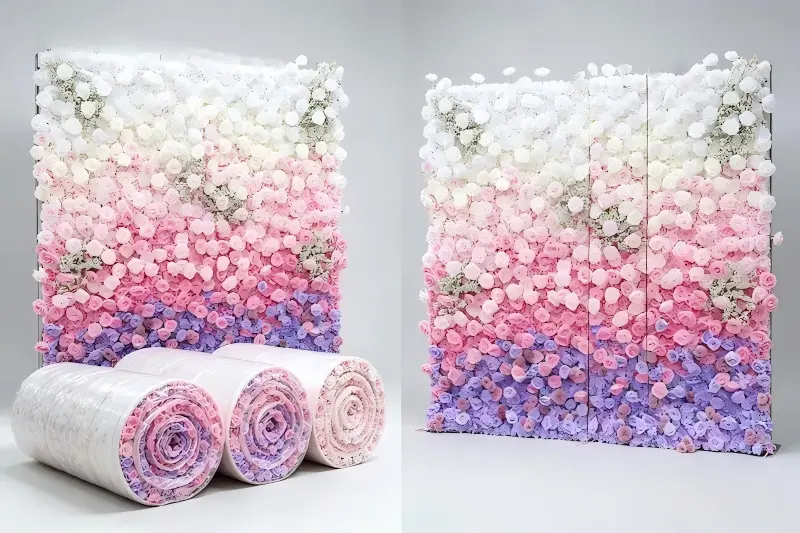
What Is a Rolling Fabric Flower Wall?
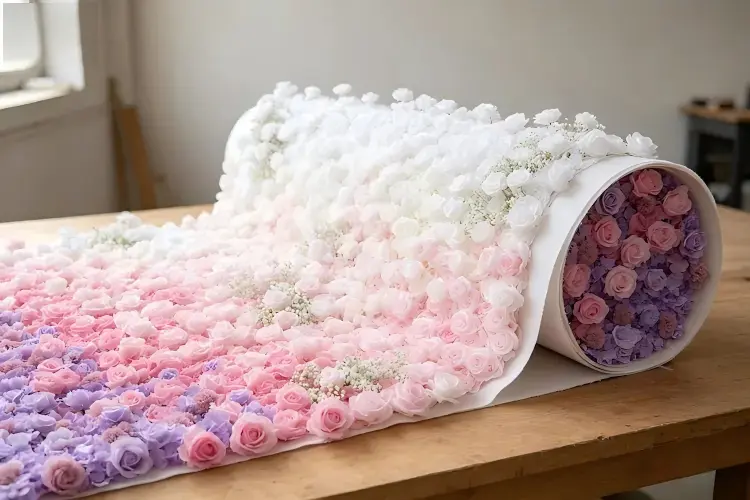
Key characteristics:
- Single continuous piece (typically 1m × 2.4m or 1.5m × 3m)
- Soft fabric or foam backing
- Rolls up tightly for transport and storage
- No visible seams when hung
- Heavier per unit but more compact when stored
At Xibo Floral, all our rolling flower walls are hand-assembled on premium fabric backing with reinforced edges, designed specifically for the demands of commercial rental use.
What Are Traditional Flower Wall Panels?
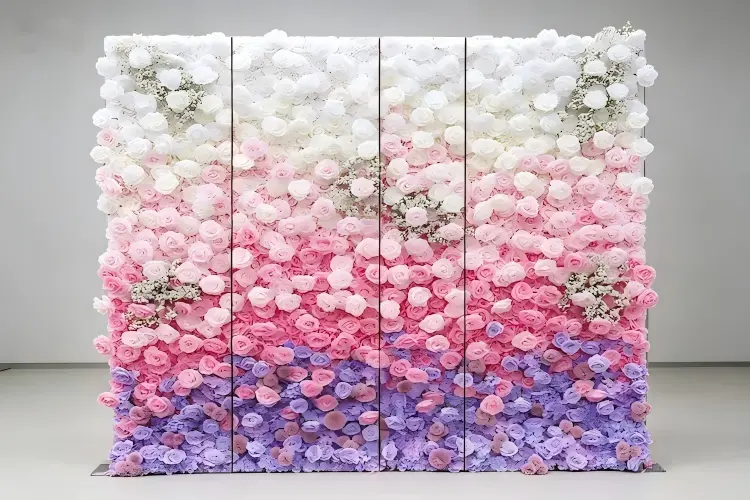
Key characteristics:
- Individual tiles (standard size: 40×60cm)
- Rigid plastic or mesh backing
- Multiple panels clipped or tied together on a frame
- Visible seam lines between panels
- Lighter per piece but bulky when you need 10+ for a full wall
Panels have been the industry standard for many years and are still popular for DIY use and small accent walls.
Side-by-Side Comparison
Here's how the two types stack up across the factors that matter most for rental businesses:
| Factor | Rolling Fabric Wall | Traditional Panels |
|---|---|---|
| Installation Time | 15-30 min (2 people) | 1-2 hours (2 people) |
| Seams | None, seamless look | Visible between panels |
| Storage Space | Compact, ~0.15 m³ | Bulky, ~0.4 m³ |
| Shipping Efficiency | Excellent (cylinder shape) | Poor (flat bulky) |
| Upfront Cost (8×8ft) | $200-$350 | $100-$250 + frame |
| Damage Repair | Needs patching | Replace single panel |
| Custom Shapes | Limited to standard sizes | Very flexible |
| Best For | Rental companies, high-end weddings | DIY, small accent walls |
Installation Speed & Ease
This is where the biggest difference shows. A rolling fabric flower wall can be hung by two people in 15-30 minutes. You simply slide it onto a backdrop stand using the built-in rod pocket, pull it tight, and you're done.
Traditional panels require building the frame first, then clipping or zip-tying each individual panel in place. For a standard 2.4m × 2.4m wall, that's 20+ individual panels and can take 1-2 hours with two people. You also need to align everything carefully to minimize visible seams.
For rental businesses, faster setup means:
- More events per day per team
- Lower labor costs per event
- Less stress on tight event timelines
- Faster teardown too
Transportation & Storage
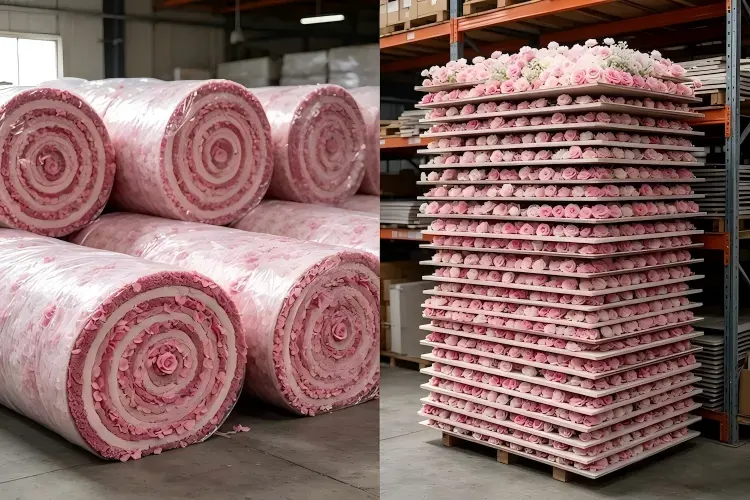
Panels, on the other hand, stay flat and rigid. Twenty 40×60cm panels take up significant shelf or van space, and you have to be careful not to bend or crack the plastic backing during transport.
Storage space comparison (per 8ft × 8ft wall):
- Rolling fabric wall: ~0.15 m³ when rolled
- Traditional panels (20+ tiles): ~0.4 m³ stacked flat
That's roughly 60% less storage space for the same coverage area. For rental businesses with limited warehouse space, this adds up quickly.
Cost Analysis
At first glance, traditional panels look cheaper — individual tiles can cost as little as $5 each. But when you calculate the total for a full wall, the gap narrows considerably.
The purchase price is comparable, but you also need to factor in:
- Shipping cost: Panels ship as bulky flat items; rolled walls ship as compact cylinders. Ocean freight for rolls can be 30-40% cheaper per unit of coverage.
- Labor cost: Faster setup saves you money at every event. If you pay staff $25/hour and save 1.5 hours per event, that's $37.50 saved per rental — adding up fast over 50+ events per year.
- Replacement cost: Damaged panels are cheap to replace individually; damaged fabric walls may need repair or full replacement.
Durability & Reusability
Both types can last 3-5 years with proper indoor use and 50+ rentals. The difference is in how they fail.
Traditional panels have rigid plastic backings that can crack if dropped or bent. Individual flowers can also pop off. The good news: you only replace the damaged panel, not the whole wall.
Rolling fabric walls have flexible cloth backing that handles transport bumps much better. The risk is tearing along the edges or rod pocket if not handled carefully. When a fabric wall gets damaged, repair is possible but trickier than swapping a panel.
For high-volume rental businesses that move inventory weekly, the flexible backing of rolling walls tends to hold up better overall because there's nothing rigid to snap.
Want to learn more about reusability? Read our full guide: Can You Reuse Artificial Flower Walls?
Which Is Right for Your Business?
Choose rolling fabric walls if:
- You run a rental business with frequent setups and teardowns
- Labor costs are a concern (faster setup = lower cost per event)
- You want a seamless, premium look for high-end weddings
- Storage and van space is limited
- You ship internationally or buy in bulk from China
Choose traditional panels if:
- You need very custom shapes or sizes
- You're building small accent walls only
- Budget is extremely tight upfront
- You prefer being able to swap individual damaged tiles
- You're a DIY user rather than a rental business
For most professional rental companies, rolling fabric walls win on the metrics that actually affect profitability: labor time, shipping efficiency, storage, and visual quality at events.
Ready to Upgrade to Rolling Flower Walls?
Our factory-direct fabric-backed rolling walls are built for commercial rental use with reinforced edges and premium silk flowers. Seamless look, fast setup, built to last 50+ events.
Browse Rolling Flower Walls