- Meet the Company: A Small Wedding Planning Firm
- The Problem: Rising Costs and Thin Margins
- The Switch to Artificial Flower Walls
- The Numbers: How Profit Margins Improved
- What Their Clients Say (and Why They Never Noticed)
- Other Unexpected Benefits of the Switch
- Lessons Learned for Other Event Companies
- How to Get Started
- Frequently Asked Questions
Every wedding planning business owner knows the same struggle: flowers are beautiful, but they eat into your profits. Fresh floral decor looks incredible on the wedding day, but it is expensive, fragile, and single-use. By the end of the reception, thousands of dollars worth of flowers are headed for the compost bin. What if you could deliver the same luxury look — or better — while keeping more of every booking fee as actual profit? That is exactly what one mid-sized wedding planning company did when they added artificial flower walls to their inventory. The results surprised even them: a 35% increase in profit margins on wedding packages, happier clients, and less stress on event day. This is their story.
Meet the Company: A Small Wedding Planning Firm
Let us set the scene. The company is a boutique wedding planning firm based in the Midwest, with a team of four full-time planners and a network of freelance designers. They do about 28-32 weddings per year, mostly in the $25,000-$45,000 full-service price range. They had been in business for six years and had built a solid reputation for romantic, elegant wedding design.
Like most wedding planners, their biggest variable cost was always fresh florals. They worked with a local florist who did excellent work, but the numbers were always tight. A typical wedding ceremony backdrop would cost $1,800-$2,500 in fresh flowers — and that was just one element. Add centerpieces, aisle decor, and reception pieces, and florals alone could eat up 30-40% of the entire decor budget.
The owner knew their margins were thin. They also knew that every year, wholesale flower prices kept going up. Weather issues, shipping delays, and demand spikes meant quotes were never reliable more than a few weeks out. They needed a way to stabilize costs and improve profitability without raising their prices and pricing themselves out of the market.
The Problem: Rising Fresh Flower Costs and Thin Margins
To understand how big the change was, you have to understand where they started. Let us break down the numbers for a typical $3,000 decor package before the switch.
💰 $3,000 Decor Package: Cost Breakdown Comparison
Out of $3,000 in client revenue from decor, the old model left only $750 in gross profit — that is a 25% margin. And that was the best-case scenario. If flower prices spiked for a specific date, or if the ceremony was outdoors and they needed backup arrangements, margins got even thinner. Some summer weddings with peonies or garden roses came in at barely 15% profit.
Beyond the money, there were hidden costs: stress about flower availability and quality, early morning pickup schedules, worry about wilting in hot weather, last-minute trips for backup flowers. None of that shows up on a P&L statement, but it costs the business owner time and mental energy.
The Switch to Artificial Flower Walls
The owner first heard about artificial flower walls from another planner at a wedding industry conference. She was skeptical at first. Would they look cheap? Would clients notice? Would it feel like a downgrade from fresh flowers? She decided to test it — not as a full replacement, but as an add-on option for couples who wanted more decor without the full fresh-flower price tag.
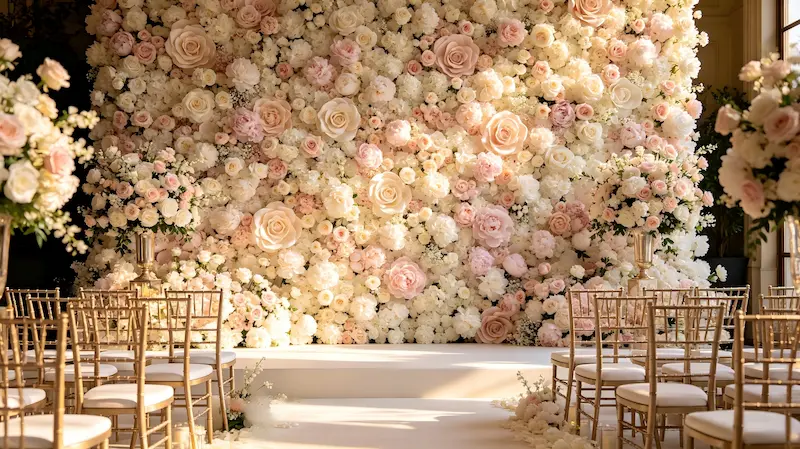
She ordered three artificial flower wall panels as a test: a large cream rose wall, a blush pink peony wall, and a greenery eucalyptus wall. Total investment: about $2,200. Her plan was to offer them as a $600 add-on to wedding packages, positioned as "luxury backdrop upgrade."
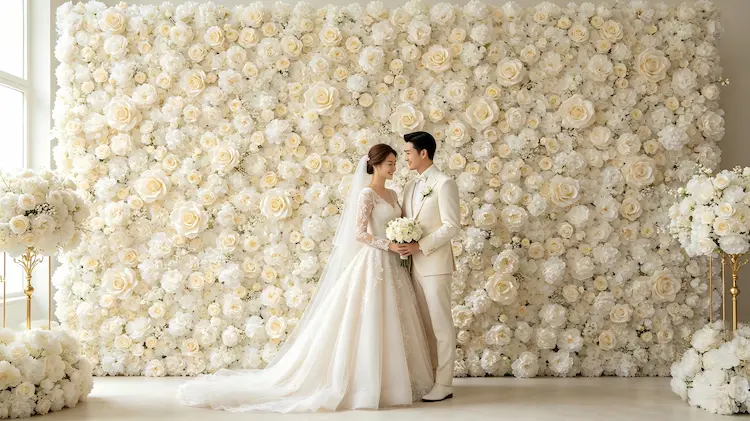
The first wedding they used it at was a $32,000 full-service booking. The couple chose the cream rose wall as their ceremony backdrop instead of the fresh floral arch they had originally considered. They saved about $900 compared to fresh flowers, and the planning company made $600 in pure profit on the wall rental — because after the initial purchase, the wall costs almost nothing to deploy.
And the reaction? The couple loved it. Their guests loved it. Nobody asked if the flowers were real. In photos, it looked lush and full and romantic — exactly the luxury feel the couple wanted. The owner realized she had been overthinking the "will people notice" question. From normal viewing distance, and especially in photos, high-quality artificial flowers read as real flowers.
The Numbers: How Profit Margins Improved
Here is the part that matters for any event business owner: the actual numbers. After one full year of offering artificial flower walls as an option, here is what changed.
Decor package margins went from 25% to 33.75% — a 35% increase in margin percentage.
How did that happen? Three factors:
- The flower walls themselves are pure profit after the first 3-4 uses
- Couples who choose artificial walls spend more overall because they get more decor for their budget
- Reduced labor time — flower wall setup takes 15 minutes per panel vs 2+ hours for fresh floral arrangements
The flower walls paid for themselves completely after the fourth booking. After that, every single rental was almost 100% profit. The only costs were minimal: cleaning between uses, transport time, and occasional replacement of individual flowers that get damaged.
Over the course of the first year, the three walls were used at 21 weddings total. That is $12,600 in revenue from a $2,200 initial investment — a 472% return on investment in twelve months.
What Their Clients Say (and Why They Never Noticed)
The biggest fear most planners have is that clients will think artificial flowers look "fake" or cheap. That was this company's biggest concern too. Here is what actually happened.
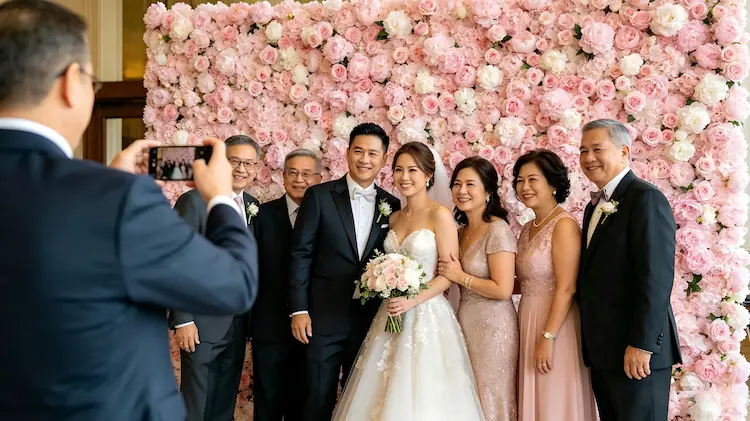
In the first year of offering artificial flower walls, exactly zero clients asked if the flowers were real. Zero. Not one person. Couples would walk up to the wall, touch the flowers, say how beautiful they were, and never question it. In post-wedding surveys, the flower wall was consistently rated as one of the top three favorite design elements of the day.
Why does no one notice? Three reasons:
- Distance. Most people view ceremony backdrops from 10+ feet away. From that distance, high-quality artificial and fresh look identical.
- Photography. In professional wedding photos, artificial flowers actually photograph better than fresh in many cases — no wilting, no closed buds, perfectly full all day.
- Context. People are at a wedding. They are not there to inspect flower quality. They are there to celebrate. The overall vibe and beauty of the moment is what matters.
The company did start being transparent about it, by the way. They added "luxury artificial flower walls" to their service menu and described them clearly. Couples chose them willingly, often because they wanted the wall for both ceremony and reception — something you cannot do with fresh flowers without paying for two sets.
Other Unexpected Benefits of the Switch
Higher profit margins were the goal, but they discovered several other benefits they had not anticipated. These are the kinds of advantages that make a real difference in day-to-day operations.
Weather reliability. Outdoor weddings are always a gamble with fresh flowers. Too hot and they wilt. Too cold and they get damaged. Rain is a disaster. Artificial flower walls? Completely weather-proof. They look exactly the same at 95 degrees or 50 degrees, in drizzle or bright sun. This eliminated a huge source of pre-wedding stress.
Same-day reuse. With fresh flowers, the ceremony arch gets used for 20 minutes and then is basically done. With an artificial flower wall, you can use it for the ceremony backdrop, then move it behind the head table for reception, then move it again for the photo booth area. Three uses from one piece of decor — and the client gets more value for their money.
Faster setup and teardown. A fresh floral backdrop takes 2-3 people 2+ hours to build on site. An artificial flower wall panel takes one person 15 minutes to hang. Faster setup means less labor cost and less stress on wedding morning. It also means the team can take on more weddings because they spend less time per event.
No waste. This one mattered a lot to the company's values. Fresh flower waste always bothered the owner — thousands of dollars of flowers going in the trash after one use. Artificial walls feel better from a sustainability angle, and many of their eco-conscious clients specifically chose them for that reason.
Lessons Learned for Other Event Companies
A year in, the owner shared what she learned — the advice she would give to any wedding planner or event rental company considering artificial flower decor.
1. Start small, test one style first. You do not need to buy a massive inventory day one. Get 2-3 panels of your most popular color, test them at a few weddings, and see how your clients respond. You can always add more styles later.
2. Position them as an upgrade, not a budget option. Do not present artificial flowers as the "cheap alternative." Present them as the "luxury backdrop that stays perfect all day and can move between ceremony and reception." Frame the value, not the price difference.
3. Invest in quality. Not all artificial flowers are created equal. Cheap, shiny polyester walls absolutely do look fake. Spend the extra money for high-quality, realistic flowers with matte finishes and natural petal shapes. The difference in perceived value is enormous.
4. Keep some fresh flowers in your mix. You do not have to go all artificial. The most successful approach is hybrid: artificial flower walls for the big statement pieces, fresh flowers for centerpieces and personal pieces like bouquets and boutonnieres. You get the margin boost where it counts, and you still get the fresh flower scent and feel for close-up elements.
5. Calculate your ROI before you buy. Look at how many weddings you do per year, what you would charge for a flower wall rental, and do the math. For most companies doing 20+ events a year, the payback period is 3-6 months. After that, it is essentially free money.
How to Get Started with Artificial Flower Walls for Your Business
If you are a wedding planner, event designer, or rental company owner reading this and thinking about making the switch, here is how to get started.
First, figure out which styles and colors make sense for your market. If you do mostly classic white weddings, start with cream and white walls. If you do a lot of boho events, start with pampas grass and eucalyptus greenery walls. Match your inventory to what your clients are already asking for.
Second, order samples before you buy in bulk. Any reputable supplier will send small sample pieces so you can see and feel the quality. Check the petal texture, the frame construction, and how easy the panels connect. Do not buy large quantities