Proper storage is what separates flower walls that last 50+ uses from ones that look beat up after 10 events. Roll them wrong, store them in the wrong conditions, or skip prep work, and you'll end up with crushed petals, bent stems, and moldy backing — all problems that could have been avoided.
This guide covers exactly how to store artificial flower walls for both short-term (between events) and long-term (off-season) storage. We'll cover rolling vs. hanging, ideal storage conditions, prep steps, and the most common storage mistakes that ruin rental inventory.
Why Proper Storage Matters for Your Investment
If you've spent hundreds or thousands of dollars on flower wall panels, you want that investment to last. Poor storage is one of the fastest ways to shorten a wall's usable life.
What bad storage causes:
- Crushed and flattened petals that never bounce back
- Bent or broken stems that need repair before each use
- Mold or mildew growth on fabric backing (especially in humid areas)
- Faded colors from UV exposure
- Tangled flowers that take extra time to set up at events
The financial angle: A well-cared-for flower wall can generate revenue from 50+ rental events at $200-500 each. That's $10,000-$25,000 per wall in potential revenue. Cut its lifespan in half through bad storage, and you're throwing away thousands in future income.
Ideal Storage Conditions
Flower walls aren't high-maintenance, but they do have preferences. Store them in these conditions for maximum lifespan:
Temperature: Cool and consistent, ideally 50-75°F (10-24°C). Avoid areas that get extremely hot (like attics in summer) or freezing cold, which can make plastic stems brittle.
Humidity: Low to moderate humidity, below 60% if possible. High humidity is the #1 cause of mold and mildew on fabric backings. If you're in a humid climate, consider a dehumidifier in the storage area.
Light: Dark or low-light areas are best. UV rays from direct sunlight fade artificial flower colors over time. Even indirect sunlight through a window can cause gradual fading if walls are stored there long-term.
Airflow: Good ventilation prevents musty smells and mold buildup. Don't seal walls in airtight plastic bags for long periods — they need to breathe.
Space: Enough room so walls aren't crushed under heavy items or leaning at awkward angles that bend frames.
Best storage locations (ranked):
- Climate-controlled storage unit (best for long-term)
- Clean garage or workshop with good airflow
- Dry basement (if not humid)
- Spare closet indoors
Worst storage locations:
- Outdoor sheds (temperature swings + humidity = disaster)
- Direct sunlight against a window
- On the floor of a damp basement
- Under heavy boxes or equipment
Preparing Walls for Storage (Don't Skip This)
Never put a flower wall into storage dirty or damp. That's how you end up with stains that set permanently and mold that grows during storage.
Pre-storage checklist:
1. Clean it first
- Do a full light dusting with a feather duster or microfiber cloth
- Spot treat any visible stains with mild soap and water
- Make sure it's 100% dry before storing. Even slight dampness leads to mold.
2. Inspect for damage
- Check for loose or fallen flowers and reattach them
- Look for bent stems and gently reshape them
- Check the backing fabric for tears or fraying
- Note any damage on your inventory log so you remember to fix it before the next rental
3. Remove accessories
- Take off any zip ties, string lights, or decorative add-ons that were used for the event
- Detach the wall from its stand or frame
4. Shape the petals
- Gently fluff and reshape any flattened petals before rolling. They hold their shape better if stored in their natural position.
Rolling vs. Hanging: Which Storage Method Is Better?
Two main storage methods, each with pros and cons.
| Rolling Method | Hanging Method | |
|---|---|---|
| Space needed | Very little (compact) | More vertical space |
| Petal shape | Some compression possible | Perfect, natural shape |
| Best for | Short-term, transport | Long-term off-season |
| Setup speed | Quick unroll + fluff | Just take down and go |
| Dust exposure | Protected when covered | More dust if uncovered |
| Hardware needed | Just straps/bag | Strong rod + wall anchors |
Method 1: Rolling (Most Common)
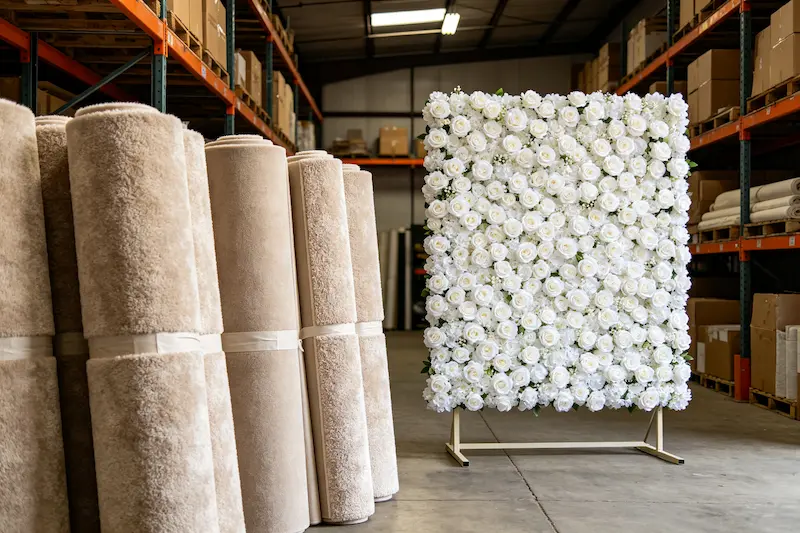
This is how most rental businesses store flower walls. You roll them up like a rug, starting from one end.
Pros: Saves space, easy to transport, works with rolling flower wall designs, protects front face when rolled petal-side-in
Cons: Can crease backing if rolled too tight, flowers on ends can get crushed, not ideal for 6+ month storage due to compression
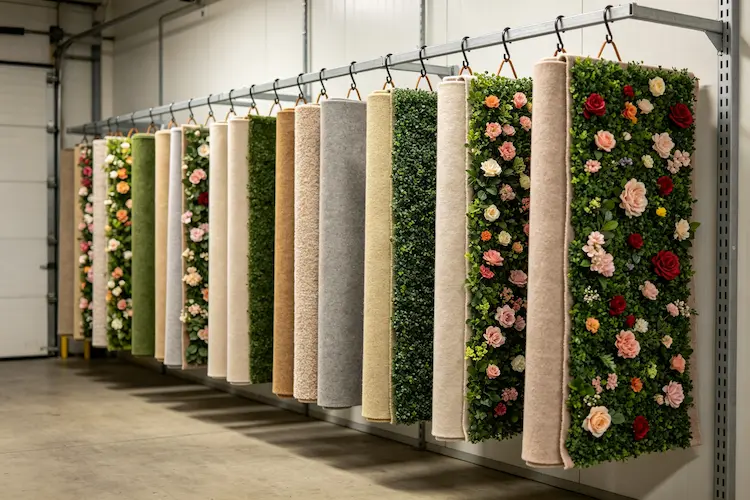
Method 2: Hanging (Best for Long-Term)
Hang the wall vertically from a rod or rack, like hanging a curtain.
Pros: No compression damage, best for off-season storage, good airflow, easy to inspect inventory
Cons: Takes more vertical space, needs proper hanging hardware, collects more dust if not covered, not practical for transport
Our recommendation:
- Between events (short-term): Roll them up — most practical for transport and quick access
- Off-season (3+ months): Hang them if you have the space — preserves shape better long-term
- If you only have space for one method: Rolling is fine for most situations, as long as you don't roll too tight and fluff petals before each use
This is the standard method used by most rental companies. Do it right and your walls will stay in great shape.
Find a clean floor or large table. Lay the wall completely flat with the flower side facing up. Make sure the surface is clean — you don't want to grind dirt into the petals.
Run your hand over the wall to fluff up any flattened flowers and make sure they're all facing the right direction. This step makes a huge difference in how fresh the wall looks when you unroll it next time.
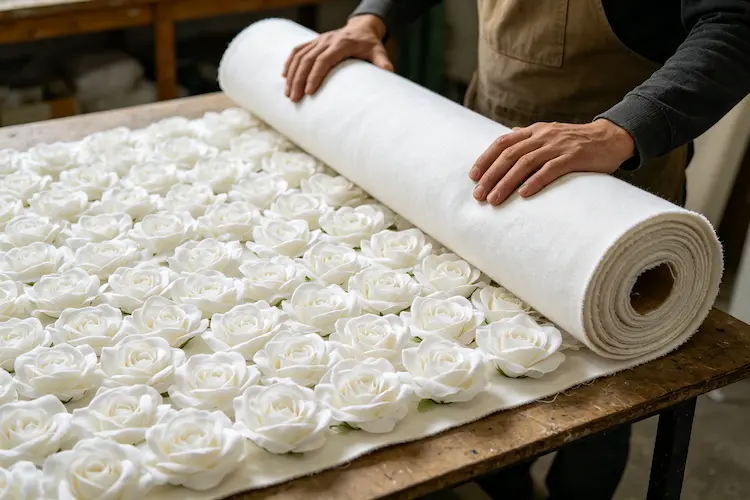
Pick one end and begin rolling evenly. Keep the roll straight — don't let it twist or become cone-shaped. Roll flower-side IN so the delicate petals are protected on the inside.
This is the #1 mistake. Roll firmly but loosely. A tight roll crushes petals and creates permanent creases in the backing. You should be able to fit a finger between the rolled layers without forcing it.
Use fabric straps, velcro wraps, or soft cotton ties to hold the roll together. Never use rubber bands or tight string — they dig into the edges and damage flowers. Two or three ties evenly spaced along the roll is enough.
Slide the rolled wall into a fabric storage bag, plastic wrap, or even an old bed sheet. This keeps dust off during storage. Leave the ends slightly open for airflow — don't seal it airtight.
Stand the rolled wall upright (vertically), like you'd store a roll of wrapping paper. Don't lay it flat and stack things on top — that crushes the roll. If storing multiple rolls together, stand them next to each other, not on top of each other.
If you're storing walls for off-season or won't use them for a while, follow these extra steps:
Before storing long-term:
- Do a deep clean, not just a quick dust
- Repair all damage — don't put it off
- Take photos of each wall's condition for your records
- Label each roll with the wall ID, size, and date stored
During long-term storage:
- Check on walls once a month. Look for mold, pests, or damage.
- If rolled, unroll and re-roll from the opposite end every 2-3 months. This prevents permanent creases from forming in the same spots.
- If hanging, gently dust off any accumulated dust monthly.
- Monitor humidity levels. If it gets too humid, run a dehumidifier.
- Keep the storage area clean — no food, no cardboard boxes (which attract pests), no standing water.
Pest prevention:
Artificial flowers don't attract pests the way real flowers do, but the fabric backing and cardboard packaging can. Keep storage areas clean and consider cedar blocks or mothballs if you're in an area with fabric pests.
Common Storage Mistakes to Avoid
These are the mistakes we see most often — and they're all preventable.
The #1 culprit for crushed petals and creased backing. Remember: firm but loose. You should be able to fit a finger between layers.
Stains set in and become permanent. Mold grows and spreads. Always clean and fully dry before storage.
Even a few heavy boxes can permanently crush the flowers on the side of the roll. Store upright, never flat with things on top.
No airflow = mold and musty smells. Use breathable covers or leave ends open.
Attics in summer, unheated garages in winter — temperature extremes make plastic stems brittle and fabric degrade faster.
When you have 10+ rolled walls in storage, you won't remember which is which. Label every roll with size, color, and condition notes.
A small mold spot or pest issue becomes a big problem if it goes unnoticed for months. Monthly check-ins take 5 minutes and save you from major losses.
Looking for Durable Flower Walls Built for Rental Use?
Our factory-direct silk flower wall panels are designed for 50+ uses and store beautifully with proper care. Replacement flowers included with every order.
Browse Full Collection