Introduction
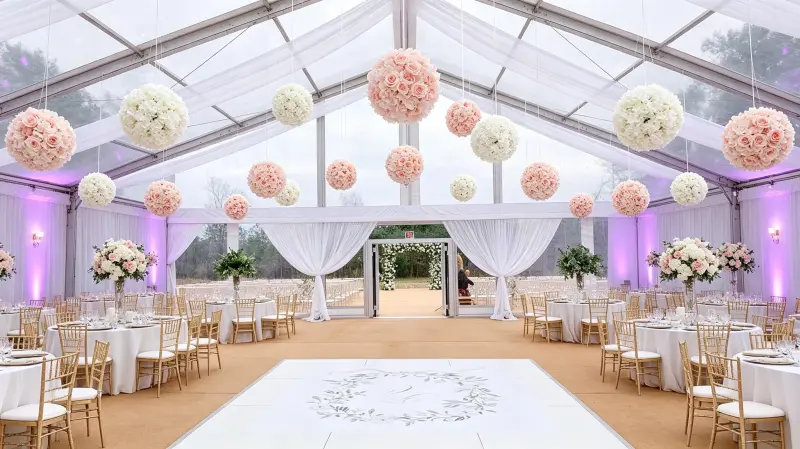
Hanging flower balls from the ceiling transforms any venue — adding romance, dimension, and that "wow factor" guests remember. But improper installation can lead to damaged ceilings, safety hazards, or flower balls crashing down mid-event. This guide covers every ceiling type (drywall, beam, tile, tent, outdoor), the right hardware for each, weight calculations, and 6 proven design layouts. Whether you're a DIY bride, event planner, or rental business owner, these techniques ensure a safe, beautiful installation every time.
Wholesale Flower Balls from $4.50-25 Each
Lightweight (4-16oz), commercial-grade, 50+ reuse lifespan. MOQ 1 piece, custom sizes/colors. Free samples available.
Request Wholesale PricingTools & Hardware You'll Need
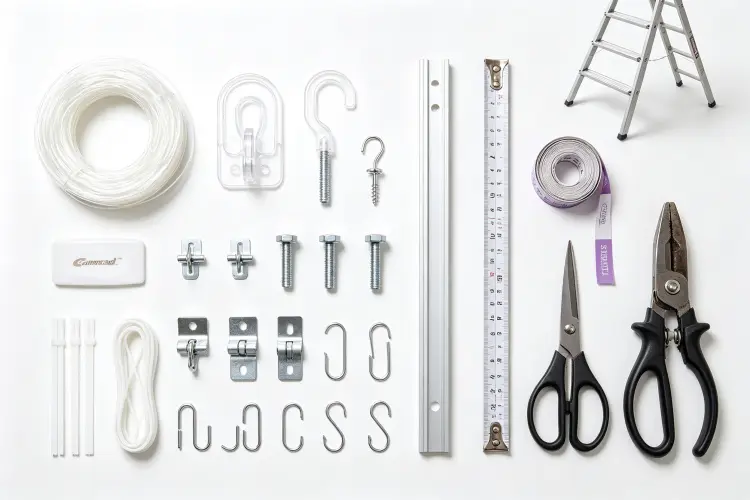
| Item | Purpose | Est. Cost |
|---|---|---|
| Fishing line (50lb test, clear) | Invisible hanging for all ceiling types | $5-10 |
| Clear command hooks (medium, 5lb) | Drywall/glass without drilling | $8-12 |
| Ceiling hooks (screw-in, 10lb) | Drywall/wood with drilling | $5-8 |
| Toggle bolts (1/4 inch) | Heavy items on drywall without stud | $8-12 |
| Drop ceiling clips (T-bar hooks) | Suspended tile ceilings | $6-10 |
| Tent pole hooks / S-hooks | Tent and canopy installations | $5-8 |
| Cable ties (zip ties, 8 inch) | Securing to beams, pipes, poles | $3-5 |
| Ladder (6-8 foot step ladder) | Reaching ceiling for installation | $50-100 (or borrow) |
| Measuring tape + marker | Layout planning and marking | $5-10 |
| Scissors / wire cutters | Cutting fishing line and cable ties | $5-10 |
Step 1: Plan Your Layout
Before You Hang Anything
- Measure the space: Ceiling height, room dimensions, table/guest layout below. Note any obstructions (lights, fans, vents).
- Count your flower balls: Determine how many you need based on the design (see 6 layouts below). Typical: 10-30 balls for a standard event space.
- Map positions on paper: Draw a top-down view of the room. Mark where each flower ball will hang. Number them for reference during installation.
- Check venue rules: Most venues prohibit drilling, nails, or adhesive that damages surfaces. Confirm what's allowed BEFORE you arrive. Many require "no trace" installation (command hooks, fishing line, tension rods).
- Assign heights: Vary heights by 6-18 inches for visual interest. Avoid all balls at the same level (looks flat and unnatural).
Step 2: Identify Your Ceiling Type
| Ceiling Type | Best Method | Weight Limit | Drilling? |
|---|---|---|---|
| Drywall (most common) | Command hooks or toggle bolts | 3-15 lbs per point | No (command) / Yes (toggle) |
| Exposed wood beams | Cable ties or S-hooks | 20+ lbs per point | No |
| Drop/suspended tile | T-bar clips | 5-10 lbs per clip | No |
| Concrete/plaster | Adhesive hooks or tension systems | 3-5 lbs per hook | No (adhesive only) |
| Tent/canopy poles | S-hooks or cable ties on poles | 15+ lbs per point | No |
| Outdoor (tree branches) | Fishing line tied directly | Depends on branch | No |
5 Hanging Methods by Ceiling Type
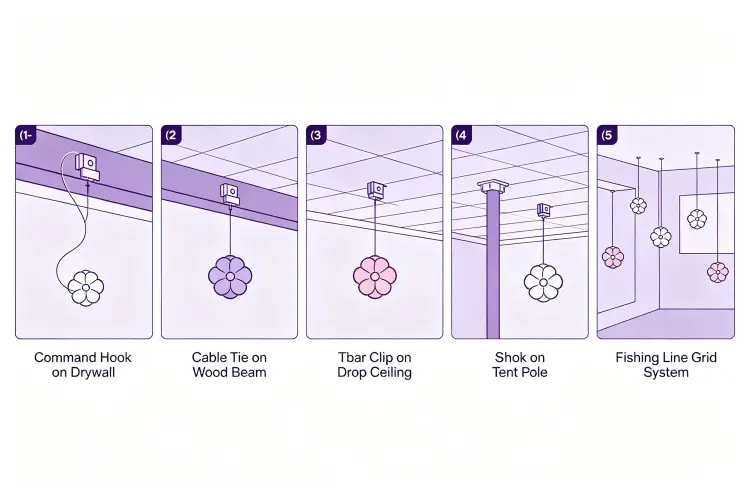
Method 1: Command Hooks (Drywall, Glass, Plaster — No Drilling)
Best for: Venues that prohibit drilling. Holds up to 5 lbs per hook (medium size). Flower balls weigh 4-16 oz each, so one hook per ball is plenty.
- Clean the ceiling surface with rubbing alcohol — dirt and dust reduce adhesion by 50%.
- Peel the backing and press the hook firmly for 30 seconds.
- Wait 1 hour before hanging anything (critical for full adhesion).
- Tie fishing line to the flower ball's hanging loop, then tie to the command hook.
- Adjust length to desired height. Tie a secure knot (double knot or bowline).
- Removal: pull the tab straight down (not outward) — it releases cleanly with no damage.
Pro tip: For extra security on important events, use two command hooks per flower ball (one as backup). Cost: $0.50 per ball.
Method 2: Cable Ties on Beams/Pipes (Industrial Venues)
Best for: Exposed wood beams, metal pipes, HVAC ducts, trusses. Holds 20+ lbs per tie.
- Loop an 8-inch cable tie around the beam or pipe.
- Thread the end through the head and pull tight — leave a small loop hanging down.
- Tie fishing line from the flower ball to the cable tie loop.
- Trim excess cable tie with wire cutters (leave 1/4 inch).
- For wood beams, you can also screw in a ceiling hook (if drilling is allowed).
Pro tip: Use black cable ties on dark beams/pipes — they're invisible from below. Clear fishing line keeps the look clean.
Method 3: T-Bar Clips (Drop/Suspended Tile Ceilings)
Best for: Office buildings, conference centers, hotels with drop ceilings. Clips onto the metal T-bar grid without damage.
- Push up slightly on a ceiling tile to access the metal T-bar grid above.
- Hook the T-bar clip over the metal rail — it clips on securely.
- Hang flower ball from the clip's ring using fishing line.
- Adjust height and tie off.
- The tile drops back into place, hiding the clip entirely.
Pro tip: T-bar clips cost $0.30 each and are reusable. Buy 30-50 for your kit — they work on virtually any drop ceiling.
Method 4: S-Hooks on Tent Poles (Outdoor Events)
Best for: Tents, canopies, gazebos, pergolas. No tools needed.
- Hook an S-hook over the tent pole or crossbar.
- Tie fishing line from the flower ball to the S-hook.
- For windy conditions: use two S-hooks (one on each side) or cable ties for extra security.
- Add a small weight (fishing weight, 1/4 oz) to the bottom of the flower ball if it spins too much in wind.
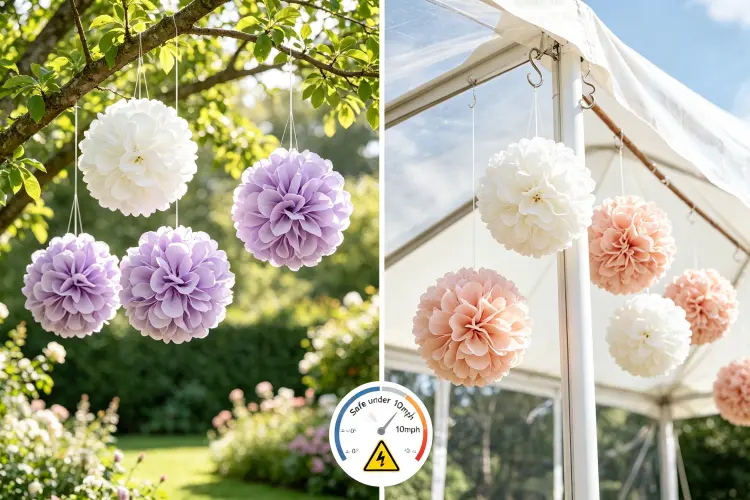
Wind warning: Outdoor hanging installations are risky in wind over 10 mph. Have a backup plan (table-top arrangement) if the forecast calls for gusts.
Method 5: Fishing Line Grid System (Large Installations)
Best for: 20+ flower balls covering a large area. Creates an invisible "web" that supports multiple balls.
- Run a main horizontal line of fishing line across the room, secured at both ends (to beams, pipes, or command hooks).
- Run perpendicular lines to create a grid pattern.
- Tie flower balls at grid intersections with varying line lengths.
- Use 50lb test fishing line for the main grid (supports 10+ balls per line).
- This method distributes weight across multiple anchor points — safer than individual hooks for large installations.
Step 3: Calculate Hanging Heights
Height Guidelines by Ceiling Height
| Ceiling Height | Lowest Ball Height | Highest Ball Height | Variation |
|---|---|---|---|
| 8 ft (standard room) | 6.5 ft (above head) | 7.5 ft | 12 inches |
| 10 ft (event hall) | 7.5 ft | 9 ft | 18 inches |
| 12+ ft (grand hall) | 8 ft | 10.5 ft | 30 inches |
| Tent (variable) | 7 ft | Near ceiling peak | 24+ inches |
Key rules:
- Lowest ball must be at least 6 inches above the tallest person's head (6.5 ft minimum)
- Never hang anything directly above a dining table lower than 28 inches above the table surface (guests need to see each other)
- For dance floors: minimum 8 ft clearance (people raise arms)
- Vary heights in groups of 3-5 — odd numbers look natural
- Create "clusters" of 3-5 balls at varying heights, then space clusters 3-5 ft apart
Step 4: Installation Step-by-Step
- Arrive early: Allow 1.5-2 hours for a 20-ball installation. Rushing leads to mistakes.
- Set up the ladder: Position on a stable, flat surface. Have a spotter hold the ladder for safety.
- Mark positions: Use a small piece of tape or a pencil mark to indicate each hanging point (per your layout plan).
- Install anchors first: Put up all hooks/clips before hanging any balls. This is faster than alternating.
- Pre-cut fishing line: Cut lines to approximate lengths (add 6 inches extra for tying). Label each with the ball number and target height.
- Hang from highest to lowest: Start with the balls that hang closest to the ceiling, then work down to the lowest ones. This avoids bumping already-hung balls.
- Adjust and level: Once all balls are hung, step back and view from multiple angles. Adjust heights for balance and symmetry.
- Security check: Gently tug each ball to confirm it's secure. Check every knot and hook.
- Photograph: Take wide shots and close-ups for your portfolio. Photograph from guest eye level and from below.
- Document removal: Note which hooks are command (pull tab) vs. permanent (unscrew) for efficient teardown.
Safety & Weight Limits
Critical Safety Rules
- Never exceed weight ratings: A 5lb command hook holds 5 lbs — not 10. Flower balls are light (4-16 oz), but if you're hanging multiple balls from one point, add them up.
- Always use a spotter on ladders: Never climb a ladder alone for ceiling work. Falls from 6+ ft can cause serious injury.
- Check for sprinklers and smoke detectors: Never hang anything within 18 inches of a fire sprinkler — it can prevent proper activation. Most venues have strict rules about this.
- Avoid ceiling fans: Never hang flower balls near operating fans — they can get caught and damaged, or the fan can throw them.
- Wind = risk outdoors: If wind exceeds 10 mph, take down hanging installations. A flying flower ball can injure guests or damage property.
- Secure loose ends: Trim all fishing line and cable tie ends. Loose ends can catch on clothing or scratch guests.
- Insurance: If you're a rental business or planner, carry liability insurance ($1M minimum). Most venues require proof of insurance before allowing installations.
Lightweight Flower Balls = Easier Installation
Xibo Floral flower balls weigh only 4-16 oz (vs. 1-3 lbs for fresh flower balls). Lighter = safer hanging, simpler hardware, no ceiling damage. MOQ 1 piece, 50+ reuse lifespan.
View Flower Ball Collection6 Popular Design Layouts
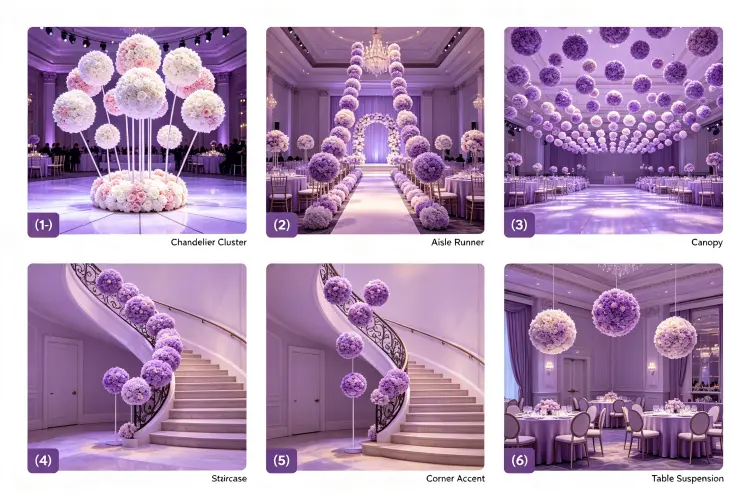
- Chandelier Cluster (Most Popular): 7-15 balls in a tight circular cluster, varying heights, centered above dance floor or head table. Creates a "floating chandelier" effect. Most impactful design per dollar.
- Aisle Runner: 10-20 balls in two parallel rows above the ceremony aisle, descending from back to front. Guides guests' eyes toward the altar. Use 8-10 inch balls spaced 2-3 ft apart.
- Canopy/Ceiling Cover: 30+ balls in a grid pattern covering the entire ceiling. Most expensive but most dramatic. Best for grand halls with 12+ ft ceilings. Use the grid system method.
- Spiral Staircase: 8-12 balls following the curve of a staircase, each at a different height. Romantic and unique. Works only at venues with a prominent staircase.
- Corner Accent: 5-7 balls in one corner of the room, cascading from ceiling to near floor. Budget-friendly option that adds drama without covering the whole room.
- Table Centerpiece Suspension: 3-5 balls suspended 28-36 inches above each dining table, replacing traditional centerpieces. Modern and space-saving. Use 6-8 inch balls for tables under 60 inches.
FAQ
Depends on the design and room size: Chandelier cluster above dance floor = 7-15 balls. Aisle runner for ceremony = 10-20 balls. Full ceiling canopy = 30-50 balls. Corner accent = 5-7 balls. Table suspension (10 tables) = 30-50 balls (3-5 per table). For a typical 100-150 guest wedding with a dance floor cluster + aisle + 5 table suspensions, plan for 35-50 balls total. Xibo Floral offers bulk pricing for 20+ units.
No — when removed correctly (pull the tab straight down slowly), command hooks leave zero residue and don't damage paint or drywall. This is why most venues approve them. The key is: (1) Clean surface with alcohol before applying, (2) Wait 1 hour for full adhesion, (3) Remove by pulling the tab straight down (not outward), (4) Don't use on wallpaper or fragile surfaces. If a venue says "no adhesive," ask specifically about command hooks — many venues that ban tape/glue still allow command hooks because they're damage-free.
For 1 person with a ladder: 5-10 minutes per flower ball (including anchor installation, line cutting, hanging, and height adjustment). A 20-ball installation takes 1.5-2.5 hours. A 50-ball canopy takes 4-6 hours. With 2 people (one on ladder, one handing balls), cut time by 30-40%. Always arrive 2-3 hours before guest arrival for hanging installations — you'll need time for adjustments and troubleshooting. Teardown is faster: 30-60 minutes for 20 balls.
Yes, but with caveats. Best outdoor options: tree branches (tie fishing line directly), tent poles (S-hooks), pergolas (cable ties). Avoid: freestanding poles in wind (tipping risk), open areas with no anchor points. Wind is the #1 enemy — anything over 10 mph can make balls swing, spin, or detach. Use heavier balls (10+ inch) for outdoor stability, and add small fishing weights inside if needed. Always have a backup plan for windy weather. Artificial flower balls handle moisture better than fresh, but prolonged rain can damage the silk petals — cover or take down if raining.
Some venues (especially historic buildings or luxury hotels) prohibit ANY ceiling attachments. Solutions: (1) Use freestanding display stands with flower balls on top — no ceiling needed. (2) Hang from existing structures that don't require attachment: chandeliers (tie around the base), curtain rods, pipe and drape systems, existing lighting trusses. (3) Use a portable frame: build a PVC or metal frame that stands on the floor, then hang balls from the frame. (4) Switch to table-top flower ball centerpieces instead. Always ask the venue coordinator about alternatives — they've seen every setup and can suggest what works in their space.
Spinning is normal with single-point hanging and usually looks fine (gentle rotation is romantic). If it bothers you: (1) Use two fishing lines per ball, attached at opposite sides — this prevents rotation. (2) Add a small fishing weight (1/4 oz) to the bottom inside the ball — lowers the center of gravity. (3) Use chain instead of fishing line — chain doesn't twist. (4) For clusters, connect adjacent balls with a short piece of line — they stabilize each other. In most cases, gentle spinning is not noticeable to guests and adds movement that looks beautiful in photos.
Ready to Hang Flower Balls at Your Next Event?
Xibo Floral supplies commercial-grade artificial flower balls in 6 sizes (4-16 inch) and 30+ colors. Lightweight (4-16oz), durable (50+ reuses), with built-in hanging loops. MOQ 1 piece, 7-15 day production, free samples available. 4000sqm factory, 500+ rental business clients worldwide.
Request Wholesale Catalog & Free Samples