- Why Custom Color Matching Matters for B2B Buyers
- The 5 Right Ways to Submit a Color Reference
- The Factory Color Matching Process: 6 Steps
- Color Drift: Why It Happens & How to Kill 80% of It
- Lead Times & MOQ Reality: What to Expect
- Materials & Dyeing Options
- The Custom Color Procurement Checklist
- 5 Costly Custom Color Mistakes
- FAQ
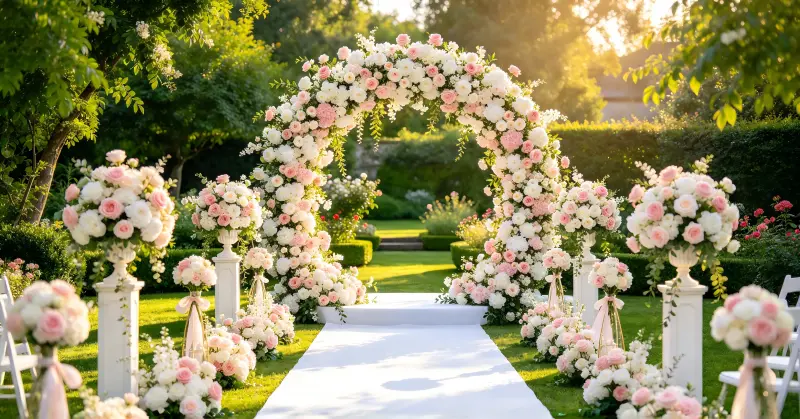
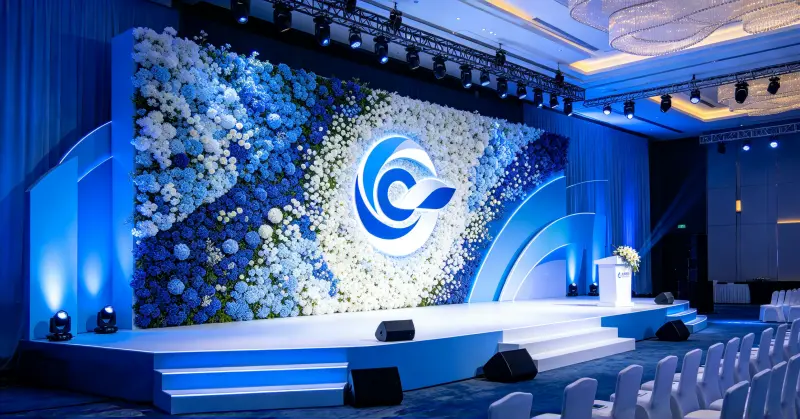
Your brand color is your signature. When a customer walks into a boutique, a wedding, or a trade show booth and sees flowers in your exact shade — not "close enough" — that's when your brand becomes unforgettable. For B2B buyers in the artificial flower industry, custom color matching is the difference between selling generic inventory and owning a proprietary collection that competitors can't copy.
But custom color is also where sourcing relationships go wrong. A shade that drifts slightly warmer, a petal that loses stiffness, or a dye batch that doesn't match the approved sample can turn an exciting collection into a costly disappointment (Botanicblossoms, 2026). The good news: color drift is preventable. Research shows that locking a single dye lot, demanding a pre-production color-matched sample approved against a Pantone reference, and splitting the order into one production batch eliminates roughly 80% of the color-drift complaints buyers face on install day (artificialflowerplant, 2026).
This guide covers why custom color matters, the five right ways to submit a color reference, the six-step factory matching process, how color drift happens and how to prevent it, the real lead times and MOQ expectations, and the procurement checklist that protects your brand color from factory floor to final delivery.
Why Custom Color Matching Matters for B2B Buyers
Custom color isn't a luxury service — it's a competitive weapon. Here's what it delivers for serious B2B buyers:
Brand consistency across every touchpoint. A wedding rental company with a signature "dusty rose" that appears in every arch, backdrop, and centerpiece builds a recognizable brand. A retailer with a seasonal collection in one proprietary palette creates a cohesive story. Custom color makes your collection yours — nobody can buy it from a general catalog.
The customization market. 78% of B2B buyers now seek customizable designs, colors, and sizes to match brand or theme aesthetics (Accio ceremony flowers research, 2026). Custom color isn't a niche request anymore — it's the mainstream expectation for serious wholesale buyers.
Seasonal and trend responsiveness. When a new trend color emerges (think terracotta, dusty blue, or meadow greens), buyers with custom color capability can own it before competitors stock it. Fast color development is a speed-to-market advantage.
The premium positioning. Custom-colored collections command premium pricing because they're exclusive. A standard catalog flower sells on price; a proprietary-color flower sells on brand value. Custom color moves you out of commodity competition.
The 5 Right Ways to Submit a Color Reference
The color matching process starts with how you submit your reference — and this is where most buyers make their first mistake. Here's what works and what doesn't (OlaSilk, 2026; Shanghai Feihua, 2025):
| Reference Type | How to Submit | Reliability | Notes |
|---|---|---|---|
| Pantone code (TCX/TPG) | Send the exact Pantone TCX or TPG code | High — industry standard | TCX for textiles/fabrics, TPG for paper — use TCX for flowers |
| Physical color swatch | Mail a fabric swatch or physical sample | Highest — no digital distortion | Compare under daylight (D65 light box), not office lighting |
| RGB / HEX value | Provide the RGB or HEX value | Moderate — screen-dependent | Screens distort color; use as secondary reference only |
| Mood board | Share a curated palette of images | Moderate — needs interpretation | Good for direction, poor for precision |
| Existing product | Ship the exact product to match | High — concrete target | Factory can measure with spectrophotometer |
| Screenshot (avoid) | Do NOT send a screenshot | Low — screen distortion | Screens compress and shift color; never rely on this |
Source: OlaSilk silk color matching guide (2026), Shanghai Feihua color matching tools (2025), Botanicblossoms color & material matching (2026).
The golden rule: send a Pantone TCX/TPG code or a physical fabric swatch as the color reference — not a screenshot or a hex value (OlaSilk, 2026). Screens distort color; physical references don't. And always ask the factory to dye a lab dip (a small dyed swatch in your exact material) before any bulk dyeing, then compare it to your reference under daylight or a D65 light box — not under office lighting (OlaSilk, 2026).
The Factory Color Matching Process: 6 Steps
Professional factories follow a structured color development process. Understanding each step protects you and sets correct expectations (Botanicblossoms, 2026; Shanghai Feihua, 2025; ZSON Flower Factory, 2026):
- Reference intake. The factory receives your color reference (Pantone code, swatch, existing product) and confirms the target product, material, and finish. This is where clarity prevents 90% of downstream problems.
- Spectrophotometer measurement. Advanced factories measure the reference with a spectrophotometer — a device that analyzes spectral reflectance to capture the exact color (Shanghai Feihua, 2025). The data becomes the production target.
- Lab dip development. The factory dyes a small swatch (lab dip) in your exact material and your exact color. This is the critical checkpoint — the lab dip is compared to your reference under controlled lighting and approved or rejected before any bulk work begins (OlaSilk, 2026).
- Sample approval. You review the lab dip or pre-production sample against your reference, approve the color in writing, and the approved sample becomes the production reference. Never approve verbally — the approved sample is your legal and quality reference.
- Bulk dyeing & production. The factory runs the bulk order against the approved sample, monitoring dye absorption, temperature, humidity, and process consistency. Production inspection compares the bulk order with the approved reference (ZSON Flower Factory, 2026; Botanicblossoms, 2026).
- Final QC & lock. Multi-stage QC checks before shipment, and the approved reference is locked for future reorders — so your next season matches your last. For large orders, request the dye lot be reserved in writing.
Color Drift: Why It Happens & How to Kill 80% of It
Color drift is the #1 complaint in custom color sourcing. Understanding why it happens is the first step to preventing it (Botanicblossoms, 2026; artificialflowerplant, 2026):
| Drift Cause | How It Happens | Prevention | Impact |
|---|---|---|---|
| Dye absorption variation | Material condition, temperature, humidity shift absorption | Lock dye lot; approve lab dip in exact material | Shade shifts batch to batch |
| Multiple production batches | Rolling shipments each dye separately | One production batch per order | Visible difference between batches |
| No approved reference | Bulk dyeing without pre-production sample | Mandatory pre-production color-matched sample | Guesswork becomes the standard |
| Process variation | Dye time, temperature, chemistry vary | Standardized dye formulas & machine settings | Unpredictable shades |
| Lighting during approval | Office lighting distorts color judgment | Approve under daylight or D65 light box | Approved wrong color |
Source: Botanicblossoms quality standards (2026), artificialflowerplant color consistency playbook (2026), OlaSilk color matching guide (2026).
The 80% solution. To source 1,000+ artificial stems without color inconsistency: lock a single dye lot with your supplier in writing, demand a pre-production color-matched sample approved against a Pantone reference, and split the order into one production batch — not three rolling shipments. That single decision eliminates roughly 80% of the color-drift complaints planners face on install day (artificialflowerplant, 2026). Everything else is enforcement of that discipline without blowing your timeline or budget.
Lead Times & MOQ Reality: What to Expect
Custom color changes your timeline. Here's the realistic picture (Union Chance, 2026; Alibaba Seller Central, 2026; LuminFlora, 2026):
| Order Type | Lead Time | Typical MOQ | Notes |
|---|---|---|---|
| Standard stock design | 15–25 days | 100+ pcs per style (factory) | No color development needed |
| Custom color (dye setup) | Standard + 7–15 days | 100+ pcs per style | Dye setup added for color development |
| Custom color (low MOQ) | Standard + 7–15 days | 10 pcs (wholesale market) | Market traders offer lower MOQs at premium price |
| Full OEM/ODM project | 4–8 weeks | 500 pcs per design | New molds, custom materials, packaging |
| Container-load wholesale | 25–35 days | Container quantity | Standard production cycle for CL orders |
| Peak season (Sep–Jan) | Extended 30–50% | Varies | Plan peak-season orders 2 months ahead |
Source: Union Chance sourcing guide (2026), Alibaba Seller Central low-MOQ guide (2026), LuminFlora production cycle (2026).
Plan backward. If your collection launches in March, the custom-color production must start by mid-January (factoring peak-season delays). If you're planning a wedding-season collection (peak May–September), order by January to lock dye lots before the rush. Custom color is worth the lead time — but only if you schedule for it.
Materials & Dyeing Options
Custom color works differently on different materials. Know your options before you specify (LuminFlora, 2026; LikeFlora, 2026):
| Material | Color Characteristics | Best For | Dyeing Method |
|---|---|---|---|
| Silk / fabric | Rich, realistic color absorption; best color range | Premium collections, bridal florals | Reactive dye, Pantone TCX matching |
| PE / plastic | Vivid colors, UV-stabilized options | Outdoor, high-volume commercial | Injection color, coating |
| PU / real-touch | Moist, lifelike texture; custom tones possible | High-end hydrangeas, statement pieces | Advanced dyeing & coating technologies |
| EVA foam | Lightweight, matte colors | Volume flowers, budget lines | Pigment blend at molding |
| Hand-painted accents | Unique gradients, custom detailing | Signature pieces, designer collections | Hand-painted techniques |
Source: LuminFlora material options (2026), LikeFlora real-touch customization (2026), Xibo Floral factory capabilities.
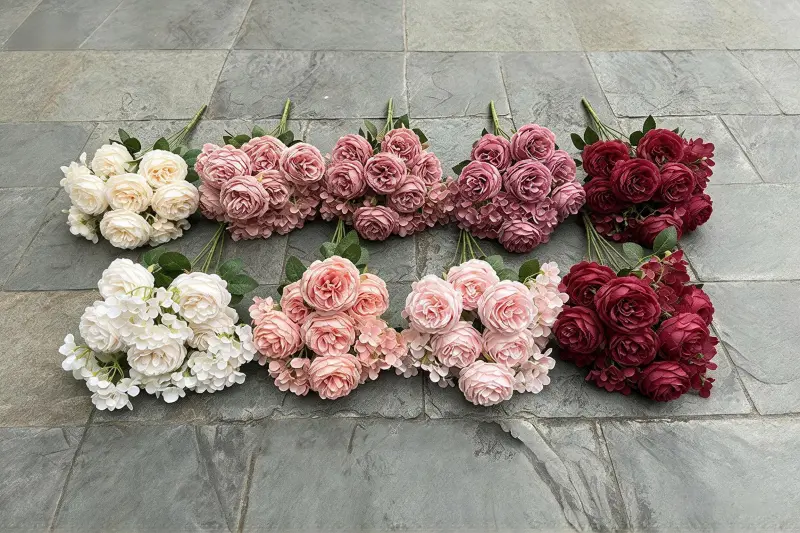
Real-touch customization. Real Touch hydrangeas can be fully customized across a broad spectrum of colors — from soft pastels to vibrant jewel shades — using advanced dyeing and coating technologies while maintaining the signature moist, lifelike texture (LikeFlora, 2026). This is the premium tier of custom color, and it's where brand-defining collections are built.
The Custom Color Procurement Checklist
Before you commit to a custom color order, verify these eight points:
- Submit a Pantone TCX/TPG code or physical swatch. Never a screenshot. Physical references are the only distortion-free target (OlaSilk, 2026).
- Demand a lab dip in your exact material. A lab dip in different material can't validate the color. Approve under daylight or a D65 light box (OlaSilk, 2026).
- Get the pre-production sample approved in writing. The approved sample becomes your legal and quality reference. Verbal approval is not approval.
- Lock a single dye lot in writing. This plus one production batch eliminates ~80% of color-drift complaints (artificialflowerplant, 2026).
- Confirm the factory uses a spectrophotometer. Instrument-based matching beats visual matching every time (Shanghai Feihua, 2025).
- Check batch-to-batch consistency for reorders. Confirm the approved reference is archived so next season matches this season.
- Factor dye-setup lead time. Custom color adds 7–15 days; peak season adds 30–50%. Schedule backward from your launch date (Union Chance, 2026).
- Request multi-stage QC documentation. Internal final inspections plus optional third-party inspection before shipment (LuminFlora, 2026).
5 Costly Custom Color Mistakes
Mistake 1: Sending a screenshot as your color reference
Screens compress and shift color — the factory can't match a color it can't see accurately. Send a Pantone TCX/TPG code or a physical fabric swatch. This single mistake causes more mismatched orders than any other (OlaSilk, 2026).
Mistake 2: Approving under office lighting
Office lighting distorts color judgment — a lab dip approved under fluorescent office light can be visibly wrong in daylight. Always approve under daylight or a D65 standard light box (OlaSilk, 2026).
Mistake 3: Splitting the order into rolling shipments
Each rolling shipment dyes separately, and each batch can drift. One production batch per order — with the dye lot locked in writing — eliminates roughly 80% of color-drift complaints (artificialflowerplant, 2026).
Mistake 4: Skipping the lab dip to save time
A lab dip costs a few days but prevents a failed bulk order. Bulk dyeing without an approved lab dip means every flaw multiplies across thousands of pieces. The lab dip is the cheapest insurance in custom color sourcing.
Mistake 5: Not scheduling for dye-setup lead time
Custom color adds 7–15 days for dye setup, and peak season (September–January) extends lead times by 30–50% (Union Chance, 2026). Buyers who don't schedule backward from their launch date end up rushing orders — and rushed dye work is where drift begins.
FAQ
Factory-Direct Custom Color Development
Pantone TCX matching, lab dip development, spectrophotometer-verified color, and locked dye lots for reorder consistency. Silk, PE, PU, and EVA foam materials. MOQ 10 panels, 7–10 day production, 400+ custom color projects delivered.
Request Custom Color Development