- The Science: Why Flowers Make People Buy
- Artificial vs. Fresh Flowers: The Retail Cost Comparison
- 8 High-Impact Floral Display Placements in Retail Stores
- 9 Proven Layouts That Sell Fast
- 2026–2027 Retail Floral Display Trends
- The Refresh Rule: How Often to Restyle
- 7 Costly Visual Merchandising Mistakes
- FAQ
Here's a number that should wake up every retailer: poor in-store execution costs U.S. retailers approximately $125 billion every single year — more than 3% of total brick-and-mortar retail sales (GlobalData, via Felbro Displays, 2026). That's not a niche problem. That's the cost of displays that are cluttered, products that are invisible, and store layouts that confuse shoppers. And here's the flip side: the same research shows that fixing how your store looks is one of the cheapest, highest-ROI moves you can make.
The evidence is overwhelming. Rutgers University found that the presence of flowers in retail spaces can increase sales by up to 15% (The Floral Eclectic, 2025). The Society of American Florists reports that floral designs in storefronts contribute to a 20% increase in foot traffic (The Floral Eclectic, 2025). A Statista analysis found that retailers who invest consistently in window displays see up to 30% higher foot traffic compared to stores with minimal or no window presence (Amazing Giant Flowers, 2026). And POPAI research shows that as many as 76% of purchase decisions are made in-store — meaning the store environment itself is your most powerful salesperson (VMM, 2026).
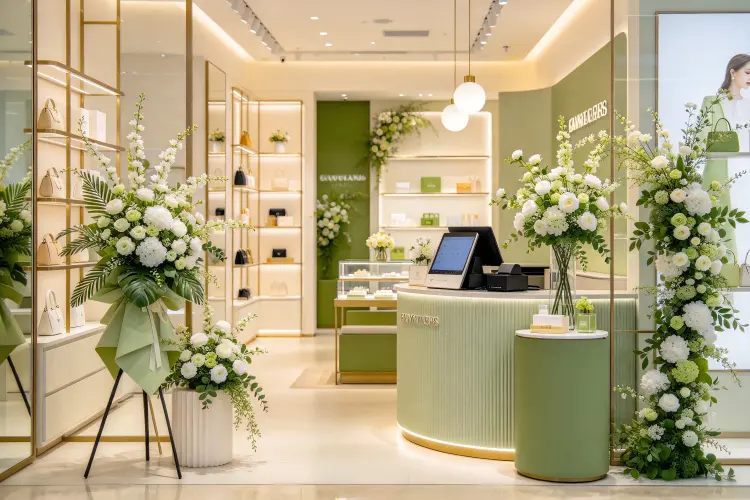
Why does this work? It's called the biophilia hypothesis. Humans have an innate tendency to seek connections with nature. When we see greenery and flowers, our brains release oxytocin and dopamine — the same chemicals associated with trust and reward. By decorating your store with florals, you're not just displaying products; you're subconsciously signaling that your brand is life-affirming, fresh, and welcoming (HS Floral Crafts, 2025). Your storefront becomes a psychological tool, not just a display.
This guide covers the science behind floral retail displays, why artificial flowers are the smart financial choice, where to place them for maximum impact, proven layouts that sell, and the mistakes that silently kill your conversion rate.
The Science: Why Flowers Make People Buy
Flowers aren't decoration. They're a psychological trigger. Here's what the research says, and what it means for your store.
| Research Finding | Statistic | Source | Retail Application |
|---|---|---|---|
| Flowers in retail spaces increase sales | +15% sales | Rutgers University study | Add florals to high-traffic areas and near checkout |
| Floral storefronts increase foot traffic | +20% foot traffic | Society of American Florists | Invest in window and entrance displays |
| Window display investment lifts traffic | +30% foot traffic | Statista visual merchandising analysis | Maintain consistent window displays year-round |
| Purchase decisions made in-store | 76% of decisions | POPAI research | The store environment is your main salesperson |
| Shoppers decide based on what they see | 8 out of 10 shoppers | Shop! Magazine | Product visibility drives buying behavior |
| Specialized displays increase same-store sales | +30% same-store sales | POPAI / VMM research | Dedicated feature displays for key products |
| Display influence on purchases | 1 in 6 purchases | POPAI research | Strategic displays directly convert browsers |
| Poor in-store execution cost | $125B/year lost | GlobalData | Fix cluttered, confusing displays immediately |
Source: Rutgers University, Society of American Florists, Statista, POPAI, Shop! Magazine, GlobalData, VMM (2026). Compiled via The Floral Eclectic (2025), Amazing Giant Flowers (2026), Felbro Displays (2026), KROFT (2026).
The biophilia connection: The biophilia hypothesis explains why this works at a neurological level. Humans evolved surrounded by nature, and our brains are wired to respond positively to it. Green spaces and flowers signal safety, abundance, and life — the exact feelings you want shoppers to associate with your brand. When a store feels "fresh and alive," shoppers stay longer, explore more, and buy more (HS Floral Crafts, 2025).
Color psychology matters too. Warm colors (red, orange, pink) stimulate appetite and energy — ideal for food, cosmetics, and fashion retail. Cool colors (white, green, blue) create calm and trust — ideal for wellness, premium, and tech retail. Matching your floral palette to your brand's psychological message amplifies both.
Artificial vs. Fresh Flowers: The Retail Cost Comparison
Fresh flowers look stunning — for about two weeks. Then they wilt, and you pay again. This is where artificial flowers win decisively for retail.
| Factor | Fresh Flowers | Artificial Flowers | Winner |
|---|---|---|---|
| Initial cost (window installation) | $800–$2,500 | $300–$1,500 (quality-dependent) | Artificial |
| Replacement frequency | Every 1–2 weeks | Years (with proper care) | Artificial |
| Annual cost (typical window) | $20,800–$65,000 | $300–$1,500 (one-time) | Artificial |
| Maintenance | Daily care, watering, replacement | Dust every 2–4 weeks | Artificial |
| Visual consistency | Varies daily, wilts | Perfect every day, year-round | Artificial |
| Seasonal flexibility | Limited to in-season blooms | Any flower, any season | Artificial |
| Outdoor durability | Days (weather-dependent) | Months–years (UV-stabilized) | Artificial |
| Allergies | Pollen triggers allergies | Hypoallergenic | Artificial |
Source: Amazing Giant Flowers retail window analysis (2026), Xibo Floral factory pricing data, industry floral installation cost surveys. Fresh flower window installations by professional designers range $800–$2,500 and last approximately two weeks.
The math is brutal for fresh flowers. A $1,200 fresh flower window installation replaced every two weeks costs $31,200/year. A $1,200 artificial installation that lasts 3–5 years costs $240–$400/year — and you can restyle it seasonally for free. Over five years, that's a $150,000+ savings for a single window display. For a store with multiple displays, the savings are life-changing. This is why retail chains and boutiques are switching to artificial in droves.
8 High-Impact Floral Display Placements in Retail Stores
Where you place florals matters as much as what you place. These are the eight highest-return locations, ranked by impact.
1. Window Display (Highest Impact)
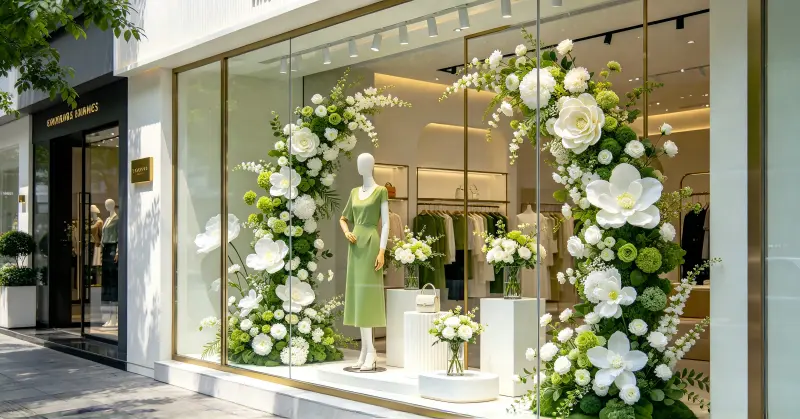
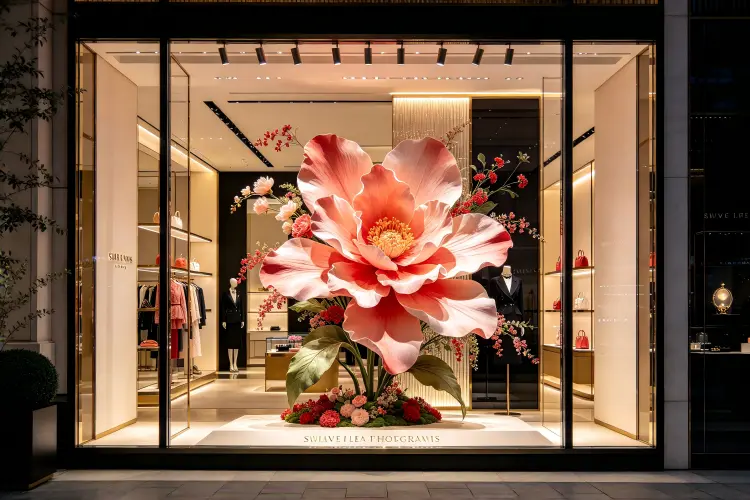
The window is your store's advertising space — the first impression that determines whether someone walks in. Studies consistently show window displays can increase walk-in traffic by 20–35% (Society of American Florists; Amazing Giant Flowers, 2026). Invest your best florals here. Giant statement pieces (24-inch blooms) work especially well because they're unexpected and memorable from the street.
2. Entrance / Entryway
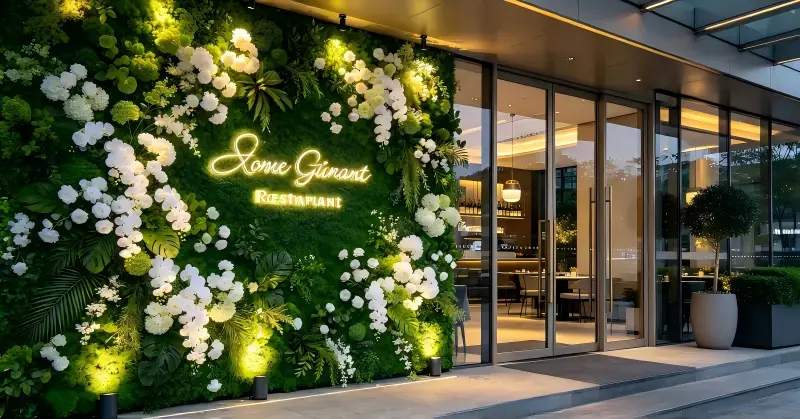
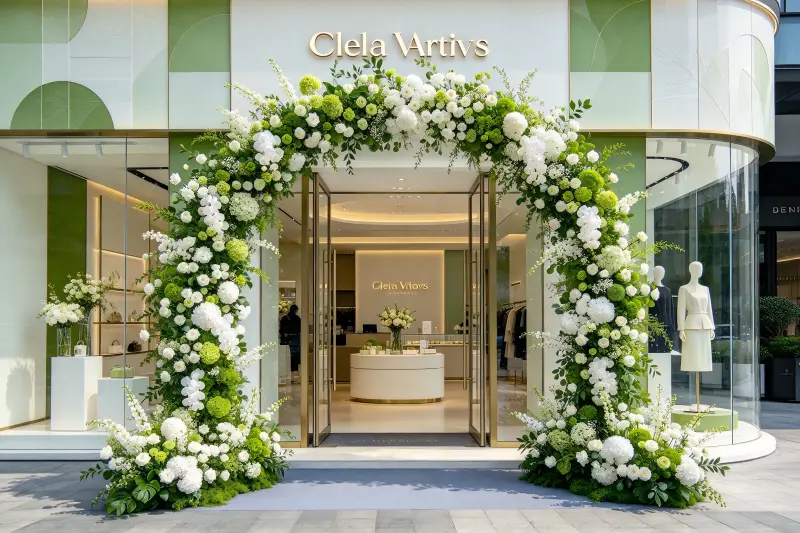
Florals at the entrance create the biophilia response at the exact moment shoppers decide whether to enter. A floral arch, flanking planters, or a display table with fresh arrangements signals "this is a quality store" before the customer commits. The entryway is also where shoppers form their first impression of your brand identity — make it floral.
3. Checkout / Point of Sale
The checkout area is where purchase decisions finalize. Florals here create a pleasant final impression and are proven to increase impulse purchases — the "last chance" zone benefits from the biophilia effect when customers are making final choices. Small arrangements on the counter or a floral backdrop behind the register work well.
4. Feature Displays / Product Focal Points
POPAI research shows specialized displays influence one in six purchasing decisions and can increase same-store sales by 30%. Florals around a featured product (new arrivals, bestsellers, seasonal items) draw the eye and frame the product as special. Use florals as the "spotlight" around products you want to push.
5. Dressing Rooms / Fitting Areas
In fashion retail, the dressing room is the moment of truth — where customers decide to buy or not. Floral arrangements here create a pleasant, calming atmosphere that reduces the "mirror anxiety" that kills sales. A simple vase or small wall arrangement works wonders.
6. Stairways, Landings & Transition Zones
Transition zones (stairways, corridors, landings) are dead zones where shoppers' attention wanders. Florals here re-engage attention, create photo moments, and keep shoppers in a positive mood as they move through the store. This is especially valuable for multi-floor retail.
7. Restrooms & Service Areas
Florals in restrooms and service areas are the ultimate "attention to detail" signal. Customers notice these small touches and translate them into higher perceived quality — and higher willingness to pay. This is one of the cheapest quality upgrades a store can make.
8. Photo Moment / Social Media Corner
Creating a dedicated "Instagrammable" floral corner turns your store into a marketing channel. Customers photograph themselves in front of your florals and share — giving you free social media reach with your brand in the frame. This is the 2026–2027 experiential retail trend: physical stores becoming brand stages (Northbanks Chelsea in Bloom analysis, 2026).
9 Proven Layouts That Sell Fast
How you arrange flowers in a display is as important as the flowers themselves. Poor styling hides quality and makes buying harder. These nine layouts are proven to sell (Botanicblossoms, 2026):
- One clear focal point. Every display needs a hero — one arrangement, one color, or one product that the eye lands on first. Displays without a focal point feel flat and confusing.
- Vary the stem heights. Uniform height = boring. Layer short, medium, and tall stems to create depth and dimension that draws the eye.
- Group related colors. Scattered colors look chaotic. Grouping by color family creates visual order and makes it easier for shoppers to compare and choose.
- Leave open space. Cramped displays hide quality. White space lets each arrangement breathe and makes products look more premium. Empty space sells.
- Show finished uses. Don't just show stems in vases — show a styled arrangement in context (on a table, in a living room scene, as a centerpiece). This helps shoppers imagine the product in their own space.
- Create visual triangles. Arrange products and florals in triangular formations (tall center, shorter sides) — the most pleasing composition to the human eye.
- Use height variation in displays. Use risers, pedestals, and shelves to create a multi-level display. Flat displays at one height are invisible below eye level.
- Frame with greenery. Use green foliage as a framing element around colorful flowers — it makes colors pop and adds natural texture.
- Rotate the hero product. Change which product is the focal point weekly to keep repeat customers discovering new items.
2026–2027 Retail Floral Display Trends
Retail floral displays are evolving fast. These are the trends shaping 2026–2027 (Accio market research, 2026):
| Trend | What It Means | Why It Matters | How to Implement |
|---|---|---|---|
| Sustainability Focus | Eco-friendly materials: biodegradable silk, recyclable plastics | Consumers increasingly choose brands with environmental values | Source recycled-material florals; promote sustainability in-store |
| Customization Demand | Brand-specific floral designs matching identity and campaigns | Flagship stores and luxury retailers use unique designs as brand statements | Custom color palettes that match your brand's visual identity |
| Experiential Retail | Stores as brand stages, not just product displays | Physical stores must offer experiences online can't | Photo moments, floral installations, interactive displays |
| Giant Statement Pieces | Oversized blooms (24-inch) as visual anchors | Unexpected scale stops foot traffic and creates memory | One oversized piece per window display |
| Seasonal Storytelling | Displays that tell a seasonal narrative, not just product stacks | Seasonal campaigns keep the store feeling fresh and relevant | Quarterly restyle calendar with seasonal color stories |
| Digital Integration | Floral displays paired with QR codes, screens, AR | Bridges physical display and digital engagement | QR codes on displays linking to product pages or styling guides |
Source: Accio showroom decoration market research (2026), Accio shop decoration market research (2026), Northbanks Chelsea in Bloom analysis (2026), Amazing Giant Flowers retail trends (2026), Xibo Floral trend analysis.
The Refresh Rule: How Often to Restyle
Even the best display loses impact if it stays unchanged too long. The refresh rule is simple: restyle at least monthly, and rotate the focal product weekly (Koch & Co, 2026).
Weekly (15-minute updates): Rotate the hero product in the window and feature displays. Change which item is the focal point. This gives repeat customers something new to notice every visit.
Monthly (1–2 hour restyle): Swap flower colors, change ribbon accents, rearrange compositions, add new arrivals, rework props and layout. Even small changes — new ribbon color, different vase height, moved greenery — make the display feel fresh.
Seasonally (quarterly deep restyle): Match displays to seasons and campaigns: spring pastels, summer tropicals, autumn warm tones, winter whites and golds. Seasonal storytelling keeps your store relevant and gives customers a reason to return. This is where artificial flowers shine — you can restyle endlessly without replacement cost (Koch & Co, 2026).
Wholesale Artificial Flowers for Retail Displays
Factory-direct artificial flowers and floral walls in retail-grade quality. UV-stabilized outdoor options, hypoallergenic materials, MOQ 10 panels, 7–10 day production. Built for retail chains and boutiques that need beautiful displays without the $30K/year fresh flower bill.
Request Retail Wholesale Catalog & Pricing7 Costly Visual Merchandising Mistakes
Mistake 1: Cluttered displays
GlobalData research shows cluttered displays are a top driver of the $125B/year loss in U.S. retail. When everything is visible, nothing stands out. Edit ruthlessly — remove anything that doesn't serve a purpose. Leave open space. A display with 20% empty space outperforms a wall-to-wall display every time.
Mistake 2: No focal point
A display without a hero item is invisible. Every display needs one clear focal point — the product or arrangement the eye lands on first. This is the "one thing" shoppers remember. Without it, the display is background noise.
Mistake 3: Products below eye level
Anything below waist height is invisible to most shoppers. Use risers, pedestals, and shelving to bring products into the eye-level zone (55–65 inches from the floor). This simple fix dramatically increases product visibility and sales.
Mistake 4: Static displays that never change
Customers stop noticing displays that stay the same. The refresh rule exists for a reason — weekly rotation, monthly restyle, seasonal storytelling. Static displays train your regulars to ignore your store.
Mistake 5: Ignoring the window
The window is your most valuable advertising space — it works 24/7 without media cost. Stores with minimal or no window presence see 30% less foot traffic (Statista). Yet many retailers leave windows dark, cluttered, or unchanged for months. Treat the window as a paid campaign that never ends.
Mistake 6: Using cheap, visibly artificial flowers
Low-quality artificial flowers look obviously fake — and that signals "cheap store" to customers. The gap between cheap and premium artificial flowers is large: cheap ones have flat colors, shiny plastic textures, and visible seams. Premium ones are indistinguishable from fresh at arm's length. In retail, quality of display = perceived quality of brand. Invest in good florals or don't use them.
Mistake 7: No social media moment
In 2026–2027, a store without a photo-worthy moment is missing free marketing. Customers photograph themselves in front of beautiful displays and share — each photo reaching hundreds of people with your brand. Create at least one dedicated "Instagrammable" floral corner with good lighting and let your customers do the advertising.
FAQ
Source Retail-Grade Artificial Flowers Factory Direct
Wholesale artificial flowers, floral walls, and giant statement blooms for retail displays. UV-stabilized outdoor options, hypoallergenic materials, customizable brand colors. MOQ 10 panels, 7–10 day production. Built for retail chains and boutiques replacing $30K/year fresh flower programs.
Browse Retail Floral Collection