- The Wedding Ends. The Relationship Shouldn't.
- The Inquiry: First Impression That Lasts
- The Booking: Setting Expectations Right
- The Event: Delivery That Creates Advocates
- The Follow-Up: Where 80% of Revenue Is Won
- The Referral Engine: Turning Clients Into Salespeople
- Corporate Clients: The Real Repeat Business
- If You're Starting From Zero
- Things I'm Still Unsure About
- FAQ
I've been supplying artificial floral decor to rental companies for eight years. Four hundred plus clients. I see their orders. And I've noticed something that separates the rental companies that grow steadily from the ones that struggle month to month.
I'll admit it. For years, I thought client management was "send the invoice, collect the money, move on." I told my clients the product spoke for itself. If you delivered great decor, clients would come back. I was wrong. Painfully wrong.
The wake-up call was a client in San Diego. She did beautiful work. Showed up early. Set up perfectly. Every wedding looked stunning. But after three years, she was still doing 20 weddings a year and barely breaking even. She called me, confused, said "I do everything right and I'm still struggling." I looked at her business. She had zero follow-up. Zero referral system. Zero client database. She was acquiring every single customer from scratch, every single month. That's not a business. That's a treadmill. That conversation changed everything I believe about client management.
The struggling ones treat every wedding as a one-time transaction. Bride books. Wedding happens. Invoice paid. Relationship over. Next bride.
The growing ones treat every wedding as the beginning of a relationship. Bride books. Wedding happens. Invoice paid. And then the real work starts — the follow-up, the referral ask, the anniversary check-in, the corporate event introduction.
I had a client in Portland who tracked this for two years. Her revenue from repeat clients and referrals went from 15 percent to 48 percent. She didn't spend a dollar more on advertising. She just stopped ghosting her clients after the wedding. Her cost per booking dropped by 60 percent because she was getting more business from people who already knew and trusted her.
Here's the math nobody talks about: retaining a customer is 5 to 25 times cheaper than acquiring a new one. Repeat customers spend 67 percent more on average. Referral leads convert at 3 to 5 times the rate of cold leads, and referred customers have 25 percent higher profit margins and 16 percent higher lifetime value. If you're not managing your clients beyond the wedding day, you're leaving the cheapest, most profitable revenue on the table.

1. The Wedding Ends. The Relationship Shouldn't.
Let me be blunt. Most rental companies have the client lifecycle of a goldfish. Inquiry. Quote. Book. Deliver. Collect. Forget. Six months later, the bride refers a friend, and the friend has never heard of you because you vanished from her life the day after her wedding.
The wedding isn't the end of the client relationship. It's the midpoint. The first half is getting them to book. The second half — the half most companies skip entirely — is turning them into advocates who send you more business for years.
Transaction Mindset vs. Relationship Mindset
| Metric | Transaction Mindset | Relationship Mindset |
|---|---|---|
| Revenue from repeat/referral | 10-20% | 40-60% |
| Cost per booking | High (constant new acquisition) | Low (compounding referrals) |
| Client lifetime value | $500-$800 (one wedding) | $2,000-$5,000 (wedding + referrals + corporate) |
| Referral conversion rate | Under 10% (no system) | 50-75% (active follow-up) |
| Business stability | Feast or famine | Predictable pipeline |
Data from Harvard Business Review 2024 customer retention study (1,000+ companies), McKinsey 2025 word-of-mouth marketing report, WeddingSift 2026 lead source analysis (8,200 bookings), OurStoria 2026 referral network study, and supplier observations across 400+ rental clients.
Personal referrals are the number one lead source for wedding businesses — 52 percent of all leads, with an 89 percent conversion rate. Google Search? 14 percent of leads, 41 percent conversion. If you're spending all your time on SEO and ads and zero time on client follow-up, you're fishing in the wrong pond. You know what's crazy about this? Every rental company knows referrals are important. They'll tell you "word of mouth is our best marketing." But 90 percent of them do absolutely nothing to actively generate referrals. Nothing. They just hope it happens.
And here's the kicker: 22 to 28 percent of past wedding clients refer at least one new booking within 18 months. Not 2 percent. Not 5 percent. 22 to 28 percent. That means if you do 50 weddings a year, 11 to 14 of those brides will send you a new client — if you stay in touch. If you ghost them, that number drops to near zero.
2. The Inquiry: First Impression That Lasts
Client management doesn't start after the wedding. It starts with the first email. The inquiry is where you set the tone for the entire relationship.
Most rental companies respond to inquiries like this: "Hi, thanks for reaching out. Our flower walls are $350. Let me know if you'd like to book." That's not client management. That's a price list.
The companies that build loyal clients respond like this: "Hi Sarah, congratulations on your engagement! I'd love to help with your wedding decor. A few quick questions so I can put together the right package for you: what's your venue, how many guests, and what's your color palette? I'll send over a custom quote within 24 hours."
Inquiry Response: What Separates You
| Element | Generic Response (Forgettable) | Relationship Response (Memorable) |
|---|---|---|
| Greeting | "Hi, thanks for reaching out" | "Hi Sarah, congratulations on your engagement!" |
| Content | Price list | Questions + custom quote promise |
| Timing | Whenever (2-3 days) | Within 24 hours (industry standard) |
| Next step | "Let me know" | "I'll send your quote by tomorrow" |
| Client feeling | One of many | The only one that matters |
Response time matters more than you think. The average wedding client inquires with 5-7 vendors. The first one to respond with a personalized quote wins the business 70 percent of the time. Not the cheapest. The first. If you're taking 48 hours to respond, you're losing to the guy who responds in 4 hours.
And every inquiry should go into your CRM. Not a notebook. Not a sticky note. A real CRM — even a simple spreadsheet with name, email, wedding date, venue, and what they booked. This database is your most valuable business asset. It's worth more than your inventory. Because inventory depreciates. A client database compounds.
3. The Booking: Setting Expectations Right
The booking is where you either set yourself up for a raving fan or a complaining customer. And it all comes down to expectations.
Most disputes after a wedding come from unmet expectations, not from anything you did wrong. The bride expected the flower wall to be 8 feet tall and it was 7. She expected setup by 10am and you arrived at 11. She expected the columns to be white and they were ivory. None of these are your fault — but they become your problem because you didn't set expectations clearly.
The fix is simple: a confirmation email that spells out everything. What's included. What's not included. Exact dimensions. Setup time window. Delivery radius. Damage policy. Cancellation policy. The bride signs off on it. No surprises. No disputes. No bad reviews.
I had a client in Minneapolis who had 3-4 client disputes per year. All of them were expectation mismatches. She implemented a detailed confirmation email with a digital signature. Disputes dropped to zero. Her review average went from 4.2 to 4.9 stars. And her referral rate went up because clients felt confident and informed, not anxious and surprised.
Consistent Quality = Consistent Referrals
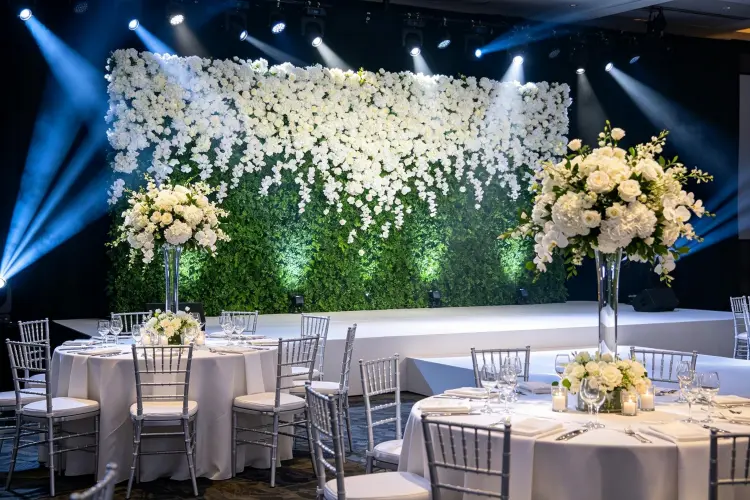
Xibo Floral artificial flower walls: every panel identical in color and density, so your clients get exactly what they expect. 5+ year lifespan, 40+ custom colors, factory-direct pricing.
Get a Wholesale Quote4. The Event: Delivery That Creates Advocates
The wedding day is your showcase. This is where you either create a raving fan or a former client. And the difference is in the details nobody talks about.
Arrive early. Not on time. Early. If setup is supposed to start at 10am, arrive at 9:30. The extra 30 minutes gives you buffer for traffic, parking, and venue coordination. And it makes you look professional. Nothing kills trust faster than a rental company showing up late to a wedding.
Introduce yourself to the venue coordinator and planner. These people see dozens of vendors a year. They remember who's professional and who's not. A good relationship with a venue coordinator means you get recommended to every bride who books that venue. A bad relationship means you get blacklisted. It's that simple.
Do a walkthrough with the client before you leave. "Sarah, everything is set up — flower wall here, columns here, aisle markers down the aisle. Is there anything you'd like adjusted?" This takes 2 minutes. It prevents 90 percent of post-event complaints. And it makes the client feel cared for.
Leave a small gift. A bottle of champagne. A handwritten thank-you note. A framed photo of the setup (if you have time to print one). This costs $10-20. It creates an emotional connection that no amount of advertising can buy. The bride will remember the gift forever. She'll tell her friends. She'll post it on Instagram. That's $20 of marketing that outperforms $2,000 of Facebook ads.
5. The Follow-Up: Where 80% of Revenue Is Won
This is the step 90 percent of rental companies skip. The follow-up. And it's where 80 percent of your future revenue lives. You're probably thinking "I don't have time for follow-up." Let me ask you this: do you have time to spend $500 on Google Ads to get one new lead? Because that's what it costs when you don't have referrals. Fifteen minutes of follow-up per client beats $500 of ads every single time.
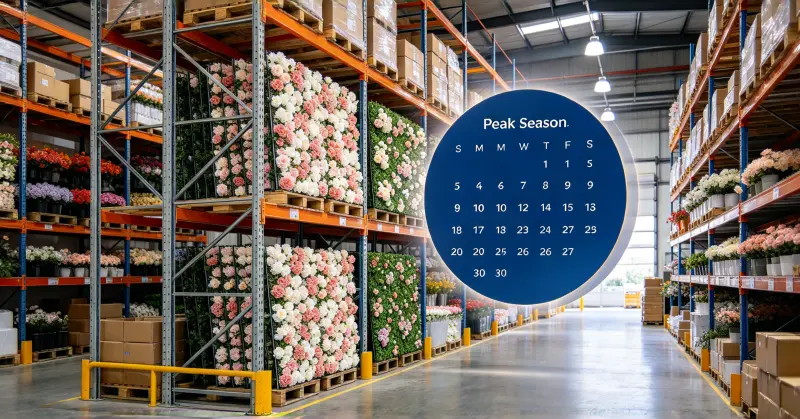
The peak referral window is 6 to 12 months after the wedding. That's when the bride's friends are getting engaged, when she's still excited about her wedding photos, when she's actively talking about her wedding to everyone she knows. If you're not in her life during that window, she'll refer the rental company she remembers — which is the one that sent her a thank-you note, not the one that vanished.
Post-Wedding Follow-Up Timeline
| Timing | Action | Purpose |
|---|---|---|
| 3 days after | Personal thank-you email + photo of setup | Stay top of mind, ask for review |
| 2 weeks after | Handwritten thank-you card + small gift | Emotional connection, create advocate |
| 3 months after | Anniversary check-in + referral offer | Ask for referral while excitement is high |
| 6-12 months after | Holiday card + corporate event intro | Peak referral window, expand to corporate |
| 1 year after | Anniversary gift + referral reminder | Long-term relationship, ongoing referrals |
The 3-day follow-up email is the most important. It should include: a personal thank-you, a photo you took of the setup (you did take a photo, right?), and a direct ask for a Google review. "Sarah, your wedding was beautiful — here's a photo of the flower wall we set up. If you loved working with us, would you mind leaving a quick Google review? It helps other brides find us. And if you know anyone getting married, I'd love to help them too — here's a $50 credit for anyone you refer."
That one email does three things: it gets you a review (which helps SEO and trust), it plants the referral seed, and it gives the bride a reason to refer (the $50 credit). It takes 5 minutes to write. It generates 22-28 percent referral rate. Do the math.
The handwritten card at 2 weeks is the secret sauce. In a world of emails and DMs, a handwritten card stands out. It says "you mattered enough for me to write this by hand." Include a small gift — a bottle of champagne, a candle, a framed photo. The bride will remember this forever. She'll show it to her husband. She'll post it. She'll refer you to everyone.
6. The Referral Engine: Turning Clients Into Salespeople
Your past clients are your best salespeople. They've experienced your service. They have photos. They have emotional connections. And they know other people getting married. The question is: are you giving them a reason to refer you?
A referral program doesn't need to be complicated. It needs to be clear, valuable, and easy to use.
Referral Program That Works
| Element | What to Do | Why It Works |
|---|---|---|
| Incentive | $50-$100 credit for every referral that books | Gives client a reason to refer, not just a favor |
| Timing | Introduce at 3-day follow-up, remind at 3 months | Peak excitement window = peak referral window |
| Ease | Unique referral code or simple "mention my name" | Friction kills referrals. Make it effortless. |
| Recognition | Thank-you note + small gift when referral books | Reinforces the behavior, creates repeat referrals |
| Tracking | Log every referral in CRM, track conversion | You can't improve what you don't measure |
Referral leads convert at 50 to 75 percent. Cold leads convert at 10 to 20 percent. That's a 3-5x difference. And referred customers have 25 percent higher profit margins because they already trust you — they don't negotiate on price. A $50 referral credit on a $1,000 booking is 5 percent acquisition cost. A Google Ads lead that costs $50 and converts at 15 percent is $333 acquisition cost. The math isn't close.
Don't just ask clients for referrals. Ask vendors too. Wedding planners, photographers, venues, caterers — every one of these professionals gets asked "do you know a good rental company?" at every event. A 10 percent referral fee to a planner who sends you 5 bookings a year is $500 in fees for $5,000+ in revenue. Three to five strong vendor partnerships can generate $100,000+ in annual revenue. That's not a side hustle. That's a business model.
7. Corporate Clients: The Real Repeat Business
Here's the secret nobody tells wedding rental companies: the real repeat business isn't more weddings. It's corporate events. This is the one that makes me want to shake people. You do a beautiful wedding for a bride. She's thrilled. She posts photos. And then you never talk to her again. Meanwhile, she works at a company that spends $15,000 a year on event decor. And you left that money on the table because you didn't send one follow-up email.
A bride gets married once. A corporate client has holiday parties, summer outings, product launches, galas, conferences — 3-10 events per year, every year. A corporate client who books you for one holiday party at $1,500 and then books you for 4 more events that year is $7,500 in revenue from one client. With zero additional acquisition cost.
And the best part? Every wedding client is connected to a corporate client. The bride works at a company. The groom works at a company. Their parents work at companies. If you do an amazing job on their wedding and stay in touch, when their company needs event decor, you're the first call.
I had a client in Seattle who got her first corporate client from a wedding bride. The bride was an HR manager at a tech company. Six months after her wedding, the company needed decor for a holiday party. The bride referred the rental company. That one corporate client now books 6-8 events per year at $2,000-$4,000 each. That's $15,000-$25,000 per year from one referral. From one wedding.
The introduction is simple. In your 6-month follow-up, add one line: "By the way, if your company ever needs event decor for holiday parties or team events, I offer corporate packages with priority scheduling. Just let me know." That's it. No hard sell. Just planting the seed. When the company needs decor, they'll think of you.
Inventory That Works for Weddings and Corporate
Xibo Floral artificial flower walls and arches: perfect for both wedding ceremonies and corporate event backdrops. Same inventory, double the revenue streams. MOQ 1 piece, sample orders welcome.
Request Free Sample8. If You're Starting From Zero
Don't build a fancy CRM. Don't create a 17-step follow-up sequence. Don't overthink it. Do three things.
Your 3-Step Client Management Launch Plan
- Build your client database. Go through your past 12 months of bookings. Put every client into a spreadsheet: name, email, wedding date, venue, what they booked. This is your gold mine. Even if you've been ghosting them, it's not too late to reach out.
- Create your 3-touch follow-up sequence. Touch 1: 3-day thank-you email with photo + review ask + referral offer. Touch 2: 2-week handwritten card. Touch 3: 3-month referral reminder + corporate intro. That's it. Three touches. No automation needed — just calendar reminders.
- Launch your referral program. $50 credit for every referral that books. Tell every past client. Tell every vendor you work with. Track every referral in your spreadsheet. Target 20%+ referral rate within 6 months.
That's it. Three steps. You can do it in a weekend. Start with your next booking. Track your referral rate for 6 months. If it's not above 20 percent, your follow-up is too weak — call me and we'll fix it.
And one more thing. Never stop following up. A client who got married 3 years ago can still refer you. A client who got married 5 years ago can still refer you. The average couple knows 8-10 people who get married within 5 years of their own wedding. If you're still in their life, you get those referrals. If you vanished, someone else does.
9. Things I'm Still Unsure About
I want to be honest here. There are things about client management I haven't figured out. And I think it's worth saying that out loud, because every business article pretends to have all the answers. And honestly, that's how you know they're selling a course.
Automated CRM systems, for example. I know there are fancy CRMs that automate follow-up emails, track client journeys, and generate referral reports. I don't know if they work better than a simple spreadsheet + calendar reminders for a small rental business. For a company doing 200+ events a year, a CRM probably pays for itself. For a solo operator doing 30-50 events, a spreadsheet might be enough. I lean toward "start simple, upgrade when you're drowning," but I could be wrong.
Loyalty programs for wedding clients. I know some rental companies offer "anniversary discounts" or "referral tiers." I don't know if these actually increase referrals or if they just complicate things. A simple $50 credit is easy to understand. A tiered program with bronze/silver/gold might confuse people. I haven't seen enough data to say definitively.
Social media engagement with past clients. I know some companies tag past clients in Instagram posts, comment on their anniversary photos, and stay active in their social lives. I don't know if this increases referrals or if it feels creepy. There's a fine line between "staying in touch" and "stalking." I lean toward "occasional genuine engagement is good, constant monitoring is weird," but I haven't measured it.
I'm also unsure about the optimal referral incentive amount. $50? $100? A free upgrade? A gift? I've seen all of these work. I haven't seen a clear winner. The incentive needs to be enough to motivate action but not so much that it attracts low-quality referrals. My instinct is $50-$100 credit is the sweet spot for wedding rentals, but different markets might need different amounts. Ask me again in a year.
FAQ
Build a Business That Runs on Referrals
Xibo Floral supplies commercial-grade artificial flower walls, arches, columns, and centerpieces to 400+ rental companies worldwide. Consistent quality that turns one-time clients into lifelong advocates. 5+ year lifespan, 40+ custom colors, factory-direct pricing.
Get a Wholesale Quote