- The Core Difference Between Silk and Polyester Flower Walls
- Durability & Lifespan: Which Lasts Longer?
- Realism & Visual Appearance: Which Looks More Natural?
- Cleaning & Maintenance Requirements
- Outdoor Performance: Weather Resistance Comparison
- Cost Breakdown for Rental Businesses
- Which Material Should You Choose?
- Frequently Asked Questions
If you run an event rental business, your flower walls are not just decor — they are inventory. They are revenue-generating assets that need to look great, survive transportation, and last through dozens of bookings. And one of the biggest decisions you will make is what material to buy: silk or polyester. On the surface, they look similar. But dig deeper, and the differences in durability, maintenance, cost per use, and long-term ROI are enormous. Choose wrong, and you could be replacing inventory after just a few events. Choose right, and the same walls can pay for themselves many times over. This guide breaks down everything you need to know — from how they hold up in rain to how they photograph — so you can make the smartest investment for your business.
The Core Difference Between Silk and Polyester Flower Walls
Let us start with the basics. Both are synthetic materials — neither is made from real silk worms. The names describe the finish and texture, not the actual fiber source.
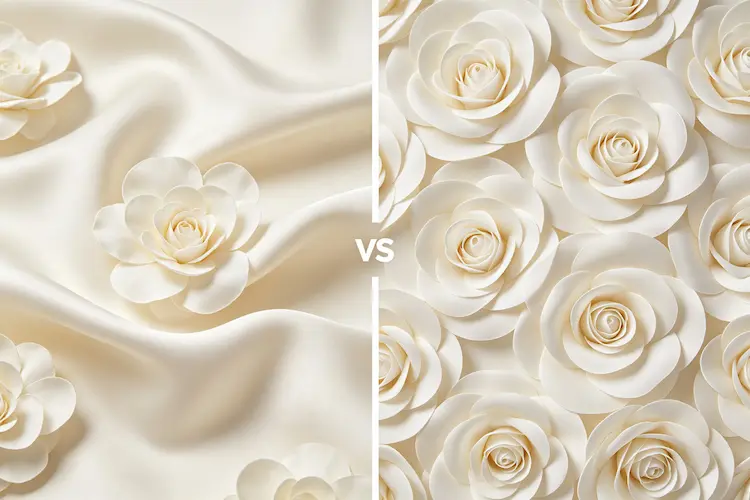
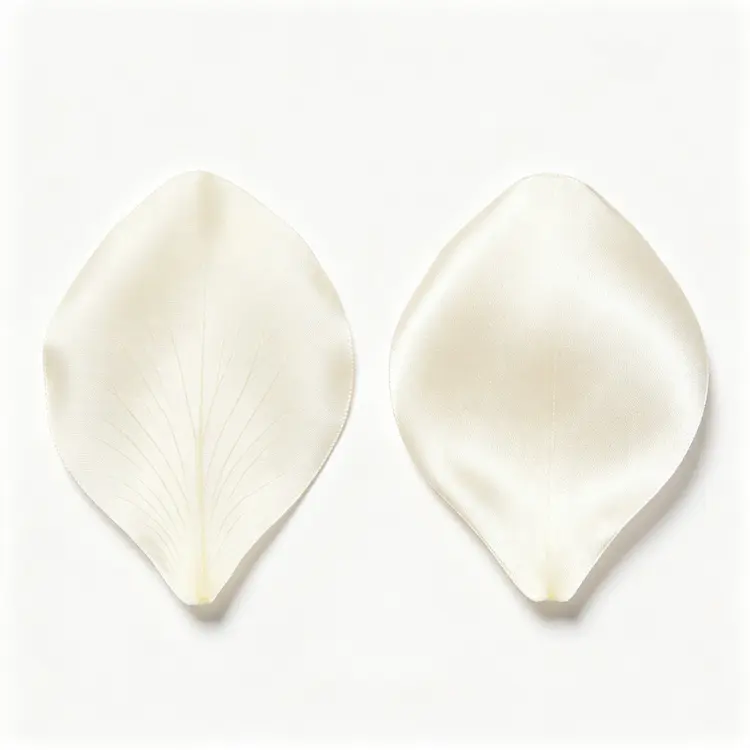
Silk artificial flowers have a soft, matte finish with a subtle sheen that mimics real silk fabric. The petals are thinner, more delicate, and designed to look as close to fresh flowers as possible. They are the premium option in the artificial flower market.
Polyester artificial flowers are made from standard polyester fabric — the same material used in outdoor furniture cushions and event draping. The petals are thicker, stiffer, and have a slightly more uniform texture. They are built for function first, appearance second.
Think of it this way: silk is the luxury sedan, polyester is the work truck. Both get you there, but they are built for different priorities.
Durability & Lifespan: Which Lasts Longer?
For rental businesses, durability is the single most important factor. Every time a wall gets damaged, you lose revenue. Here is how the two materials stack up.
Polyester flower walls are the clear winner for durability. The thicker, stiffer fibers resist crushing, wrinkling, and tearing much better than silk. After being packed in a van, unloaded, carried through doorways, and set up — which happens every single rental — polyester bounces back. Petals do not crease easily, and the structure holds its shape event after event. With proper care, a polyester flower wall can last 5-7 years or 150+ rentals.
Silk flower walls are more delicate. The thinner petals crease more easily during transport and setup. If a panel gets bent or pressed against something in transit, you will see the creases when you set it up. Silk walls still have a good lifespan — typically 3-5 years or 80-100 rentals — but they require gentler handling and more careful storage.
The math is straightforward: if you are running a high-volume rental business with frequent setups and teardowns, polyester will give you significantly more uses before replacement.
Expected Rental Lifespan Comparison
Realism & Visual Appearance: Which Looks More Natural?
This is where silk takes the lead. If your business focuses on high-end weddings, luxury events, or photo-heavy bookings, the visual quality of your inventory directly affects how much you can charge.
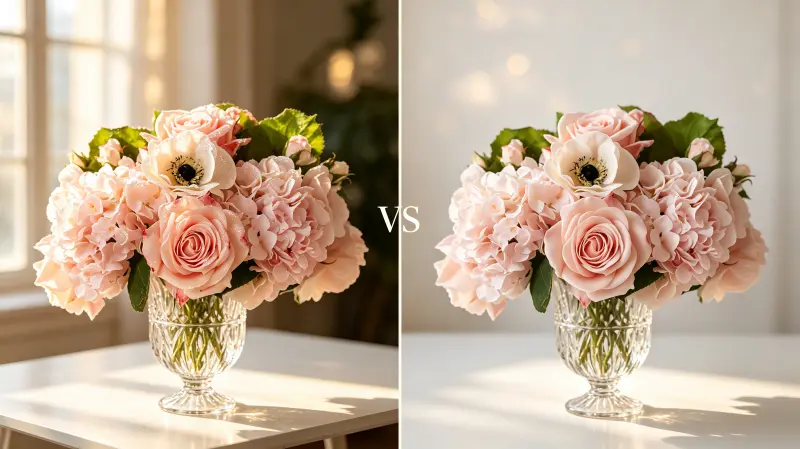
Silk flower walls simply look more realistic. The thinner petals, matte finish, and subtle color variations create a softer, more organic appearance that reads as "real flowers" from just a few feet away. They photograph beautifully — the matte texture does not create the shiny glare that can make artificial flowers look fake in professional photos. This is why most high-end wedding planners prefer silk inventory.
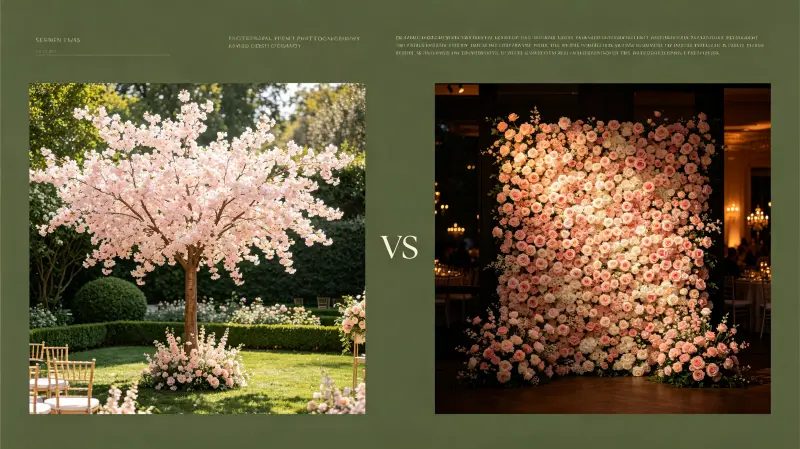
Polyester flower walls look good from a distance — 10+ feet away, most people cannot tell the difference. But up close or in close-up photos, the thicker petals and slight sheen are more obviously artificial. They are perfectly fine for general event decor, corporate events, or background pieces where guests will not be inches away. But if you are marketing premium wedding packages, polyester may not feel luxurious enough.
The key question is: what is your target market? If you compete on luxury and price per booking is high, silk justifies the premium. If you do volume events where the walls are background decor, polyester delivers great value.
Cleaning & Maintenance Requirements
Maintenance is a hidden cost that many new rental businesses underestimate. Let us compare what it takes to keep each material looking fresh.
Polyester is the low-maintenance champion. Because the fabric is stiffer and more water-resistant, you can wipe down petals with a damp cloth or even use a handheld vacuum on low suction to remove dust. Spills from drinks or rain spots blot easily without leaving stains. Polyester also resists dust buildup better because the smoother texture does not trap particles as readily. Monthly dusting and occasional spot cleaning are usually enough.
Silk requires more careful handling. You cannot get silk petals wet — water can leave spots or cause the dye to run. Instead, you use a soft brush or compressed air to remove dust, and you have to be gentle to avoid bending petals. Silk also attracts more dust because of the matte, textured surface. For high-volume operations, the extra cleaning time per wall adds up across a full inventory.
Neither material requires washing — both are spot-clean only — but polyester is significantly faster and easier to maintain between events.
Outdoor Performance: Weather Resistance Comparison
Outdoor events are a huge part of the rental market — garden weddings, corporate parties, festival activations. How your walls hold up outside directly affects what jobs you can take.
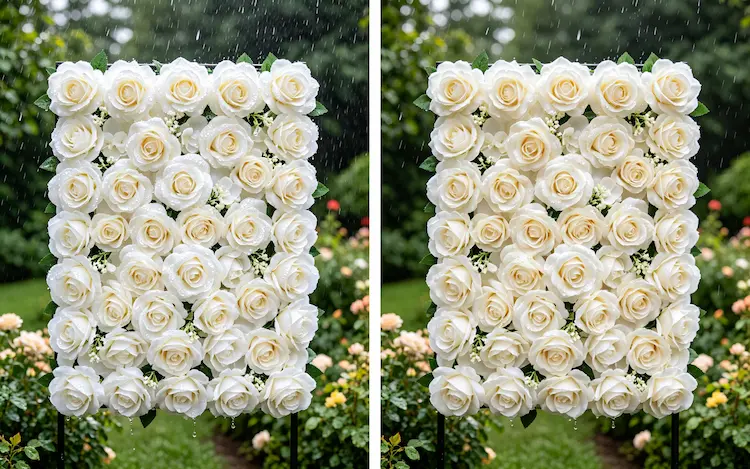
Polyester wins again for outdoor use. The synthetic fibers are naturally water-resistant, so light rain or morning dew will not damage them. They also hold up better against direct sunlight — while all artificial flowers fade eventually over years of UV exposure, polyester resists fading better than silk. Wind is less of an issue too, because the stiffer petals do not blow around as much. If you do a lot of outdoor events, polyester is the practical choice.
Silk is more vulnerable to the elements. Water spots are the biggest concern — even a light drizzle can leave visible marks on silk petals that are difficult or impossible to remove. UV fading also happens faster with silk. Most rental companies with silk inventory avoid outdoor bookings entirely, or charge a premium and take extra precautions (like tents and weather insurance). If most of your work is indoor, this is less of an issue.
Important note: neither material should be left outside permanently. Both are designed for temporary event use. But polyester handles the occasional outdoor event far more gracefully.
Cost Breakdown for Rental Businesses
Upfront cost is only part of the equation. The real number that matters is cost per rental — how much each use costs you when you spread the price over the wall's entire lifespan.
Upfront Purchase Price:
- Silk flower walls: typically 30-50% more expensive per panel
- Polyester flower walls: more affordable upfront
Lifespan (with proper care):
- Silk: 3-5 years / 80-100 rentals
- Polyester: 5-7 years / 150+ rentals
That is more than double the cost per use for silk — before you even factor in extra maintenance time and higher replacement frequency. For a rental business, polyester has a significantly better ROI on a per-use basis.
The exception is if you can charge a premium for silk inventory. If your silk walls let you charge 20-30% more per wedding because you market a "luxury silk flower collection," the math changes. But you have to actually be able to command those higher prices in your market.
Which Material Should You Choose for Your Rental Inventory?
There is no universal "better" option — it depends on your business model, target market, and growth plans. Here is our recommendation based on different scenarios.
Choose Polyester if:
- You run a high-volume rental business with frequent setups and teardowns
- A significant portion of your bookings are outdoor events
- You want the lowest possible cost per rental and maximum ROI
- You cater to corporate events, festivals, and mid-range weddings
- Low maintenance is a top priority
Choose Silk if:
- You specialize in high-end luxury weddings and premium event design
- Most of your bookings are indoor venues
- You can charge a 20%+ premium for "luxury silk" inventory
- Visual quality and photography are your top selling points
- You have the capacity for more careful handling and storage
The Hybrid Strategy (Best for Growing Companies): Most successful rental companies end up with both. Start with polyester as your core inventory — it handles the bulk of bookings and delivers consistent ROI. Then add a few silk feature walls for premium wedding packages where you can charge extra. This way you get the best of both worlds: volume revenue from polyester, high-margin bookings from silk.
Whatever you choose, the most important thing is consistency. Do not mix silk and polyester panels in the same wall — the texture difference will be noticeable. Keep your inventory standardized, and your clients will know exactly what they are getting.
Still not sure which material is right for your rental business?
We manufacture both silk and polyester flower walls for B2B event companies worldwide. Request a free sample kit and see the difference for yourself — no obligation to buy.
Request a Free Sample Kit →Frequently Asked Questions
Q: Can you mix silk and polyester flowers in the same arrangement?
A: Technically yes, but we do not recommend it for rental inventory. The texture difference is visible up close, and it makes your inventory look less professional. Keep each wall consistent — all silk or all polyester.
Q: Which material photographs better?
A: Silk photographs significantly better, especially with professional wedding photography. The matte finish does not create the shiny glare that makes polyester look artificial in flash photos. If photo quality is a selling point for your business, silk is worth the extra cost.
Q: Do polyester flower walls look cheap?
A: From a normal viewing distance (6+ feet), most people cannot tell polyester apart from silk. The "cheap" look only happens with very low-quality polyester from unreliable suppliers. High-quality polyester looks great for 90% of event use cases.
Q: How much can I charge for silk vs polyester walls?
A: In most markets, rental companies charge 15-30% more for silk flower walls, marketed as "luxury" or "premium" inventory. Whether you can actually command that premium depends on your local market and brand positioning.
Final Thoughts
The silk vs polyester debate comes down to one question: what does your business need more — lower cost per use or higher perceived value? Polyester wins on durability, maintenance, outdoor performance, and pure ROI. Silk wins on realism, photo quality, and luxury positioning. Most new rental businesses are better off starting with polyester — it is more forgiving, lasts longer, and gives you better margins while you are building your client base. As you grow and move into higher-end markets, adding silk inventory can be a smart way to increase average booking value. The best rental fleets are built strategically, not all at once. Pick the material that matches where your business is today, and expand from there.
Ready to build or expand your rental flower wall inventory? We offer wholesale pricing, custom color options, and bulk order discounts for B2B event companies. Reach out today for a free quote within 24 hours.
Related articles you may find useful:
- 💡 How Long Do Artificial Flower Walls Last? Durability Guide – Learn exactly how many rentals you can expect from each material.
- 💰 How to Set Rental Pricing for Artificial Flower Walls – Price your inventory for maximum profit.
- 🚀 How to Start a Flower Wall Rental Business – Complete guide for new event entrepreneurs.
You may also find these resources helpful:
- 📖 Read More B2B Sourcing Guides – Explore our complete collection of sourcing articles for event planners.
- ❤️ Shop Heart-Shaped Flower Walls – Our best-selling B2B item for weddings and proposals.
- 📸 View More Project Case Studies – See how other clients use our artificial flower walls in real events.
- 📩 Request a Free Sample – Get a small sample piece to test quality before your bulk order.
- 🌿 Explore Our Full Product Collection – Browse all artificial flower walls, arches, flower balls, and wedding decor.
Published in: Comparisons & Reviews | Estimated reading time: 8 minutes