Planning a fall or winter wedding comes with its own set of floral questions. What's actually in season? How do you keep flowers looking fresh in cold weather? Can you still use artificial flowers for a winter wonderland theme? We hear these questions all the time. So we put together this quick FAQ guide to answer the most common ones — and help you make confident decisions for your seasonal wedding.
Q1: What flowers are actually in season during fall and winter?
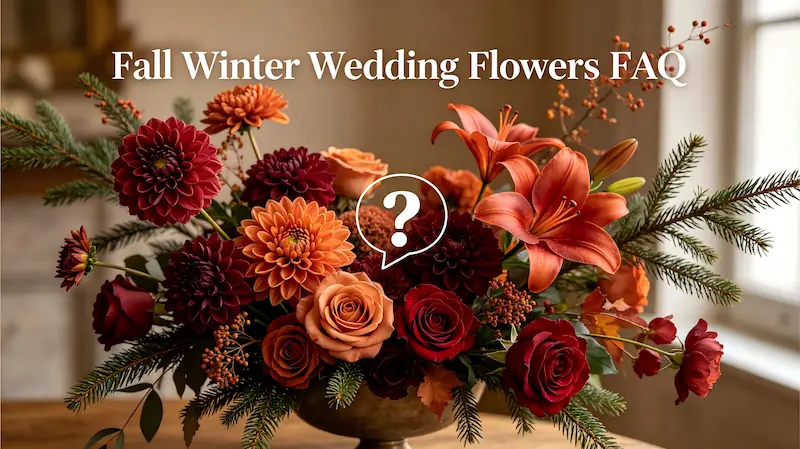
Fall: dahlias, chrysanthemums, marigolds, roses (still available), and dried elements like pampas grass and preserved leaves. Winter: amaryllis, hellebores, evergreen branches, white roses, and pine cones. With artificial flowers, you can use any of these — regardless of season or availability.
Q2: Can I use fresh flowers for a winter wedding if it's cold outside?
Yes, but they need protection. Cold temperatures can actually help fresh flowers stay fresh longer, but extreme cold or freezing will damage them. Transport them in a heated vehicle and avoid leaving them outside for too long. That's why many winter couples choose artificial flowers — no temperature worries at all.
Q3: What colors work best for fall and winter weddings?
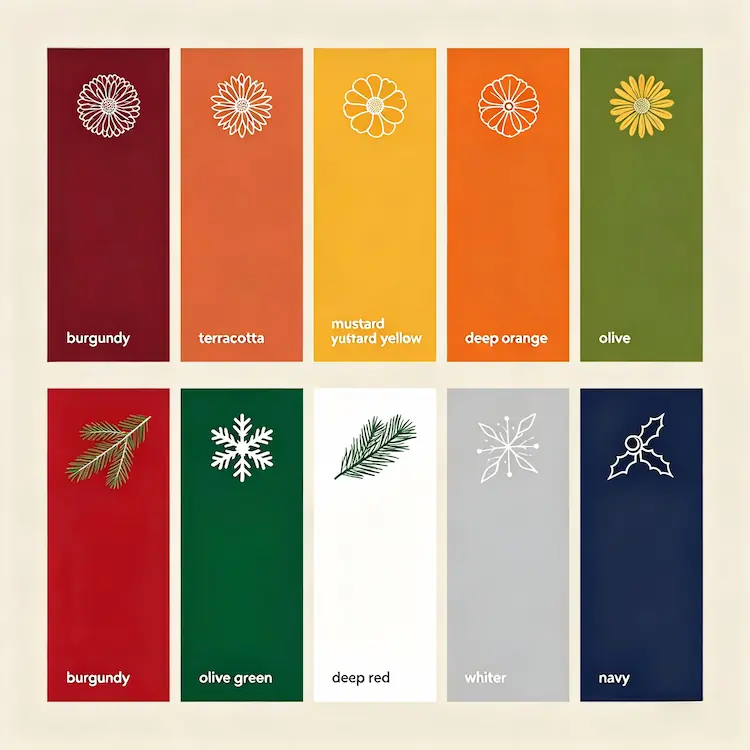
Fall: burgundy, terracotta, mustard yellow, deep orange, olive green. Winter: deep red, emerald green, white, silver, navy. Artificial flowers let you match these colors exactly — no seasonal limitations.
Q4: How do I keep artificial flowers from looking "fake" in winter photos?
Use high-quality flowers with natural texture. Add warm lighting (candles, fairy lights) to soften the overall look. Mix different flower types and greenery for depth. Avoid over-perfect symmetry — organic arrangements look more natural in photos.
Q5: Can I use dried flowers and artificial flowers together?
Absolutely. Dried flowers add texture and a rustic feel that pairs beautifully with the richness of artificial blooms. Just be aware that dried flowers are delicate and can shed — so use them strategically in low-touch areas.
Q6: What are the most popular fall flower wall colors?
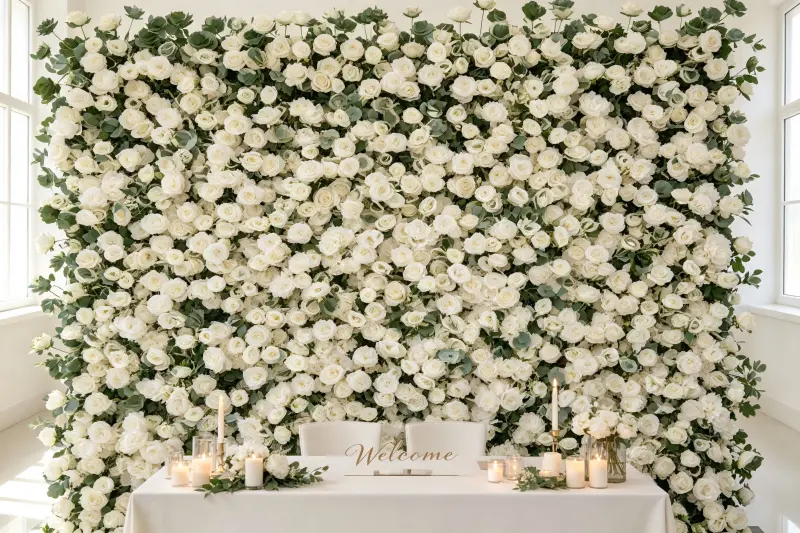
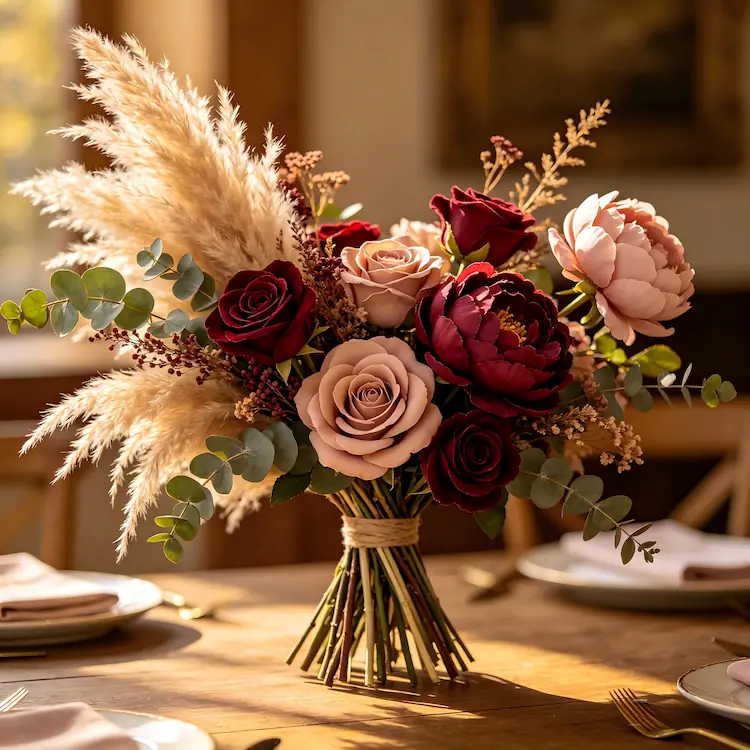
Burgundy, blush, terracotta, and ivory are the top choices. Many couples also add greenery like eucalyptus or olive branches to balance the warm tones.
Q7: Are artificial flowers cheaper than fresh for a winter wedding?
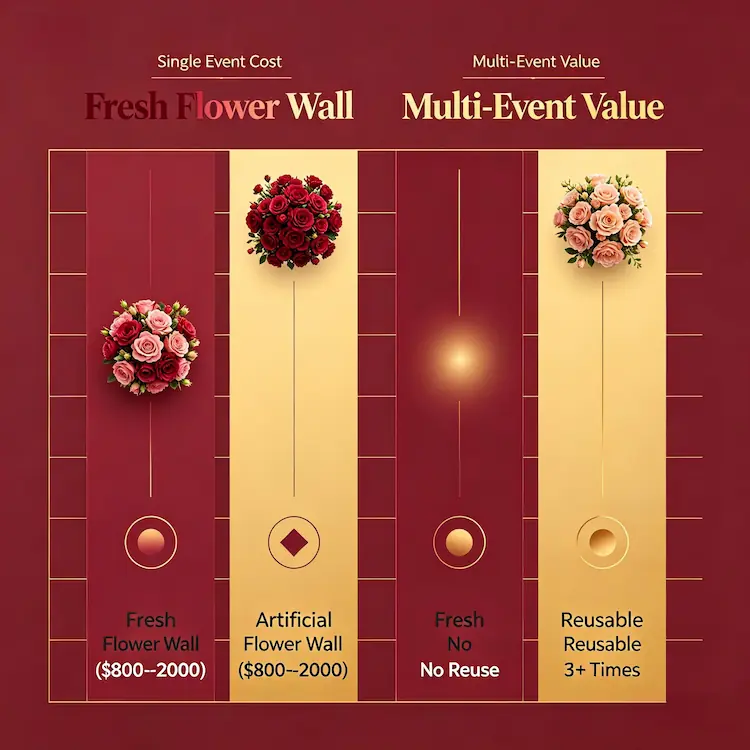
Yes, especially when you consider the long-term value. A fresh winter flower wall can cost $800-$2,000+ for a single event — and you can't reuse it. An artificial flower wall costs about the same to purchase, but you can use it for multiple events.
Q8: How far in advance should I order flowers for a winter wedding?
For fresh flowers, at least 2-3 months ahead — winter supply can be unpredictable. For artificial flowers, 1-2 months is usually enough. Artificial flowers also let you order samples in advance to check colors and quality before committing.
Q9: Do artificial flowers look good in winter wedding photos?
Yes — with the right quality and styling. Premium artificial flowers are designed to photograph beautifully. They don't wilt or droop, so they stay perfect through the entire shoot.
Q10: What's the best way to store artificial flowers between winter events?
Store them in a cool, dry place. Use breathable storage bags to prevent dust buildup. Avoid stacking heavy items on top of them. Check them periodically and fluff them up before the next event.
Still Have Questions?
Fall and winter weddings are beautiful — and your flowers should be too. Whether you choose fresh or artificial, the key is to pick what works for your season, your budget, and your style. We hope these answers help you feel more confident about your wedding floral choices.
Still have questions? We're here to help. Reach out — we'll get back to you within 24 hours.
You may also find these resources helpful:
- 📖 Read More B2B Sourcing Guides – Explore our complete collection of sourcing articles for event planners.
- ❤️ Shop Heart-Shaped Flower Walls – Our best-selling B2B item for weddings and proposals.
- 📸 View More Project Case Studies – See how other clients use our artificial flower walls in real events.
- 📩 Request a Free Sample – Get a small sample piece to test quality before your bulk order.
- 🌿 Explore Our Full Product Collection – Browse all artificial flower walls, arches, flower balls, and wedding decor.
Published in: FAQs for Buyers | Estimated reading time: 6 minutes